From watching a kingfisher flash past to spotting a marsh harrier drifting across the reedbeds, these special places have created countless memorable moments.
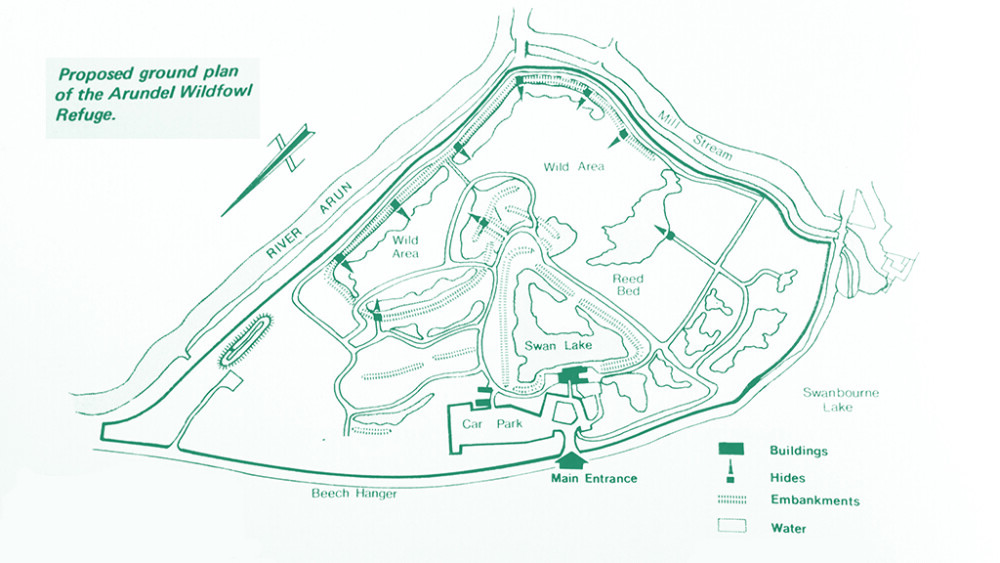
When WWT Arundel opened in 1976, just two large hides overlooked the site's developing "wild areas". As the reserve grew and new habitats flourished, more hides were added, each offering its own unique view into the lives of wetland wildlife.
Some of these hides remain familiar landmarks today, lovingly maintained and adapted through the years. Others have disappeared, been rebuilt or evolved into entirely new visitor experiences. As we celebrate WWT Arundel's 50th anniversary, we're looking back at the stories behind these much-loved wildlife watching spots and the role they've played in helping generations of visitors discover the wonder of wetlands.
The Scrape Hide
There has been a hide at this location since WWT Arundel opened in 1976. Early maps simply label it as the "Large Hide", but by the mid-1980s it appeared on site maps as the Scrape Hide, named after the wader scrape it overlooks.
From the hide, visitors can also look across to the Lost Reedbed, an area with no public access that provides an important refuge for wildlife.
The Scrape Hide is one of the best places to watch wintering snipe feeding along the water's edge and marsh harriers coming into roost from October to February. The fen cut to the left has also produced memorable sightings of bittern and glossy ibis over the years.
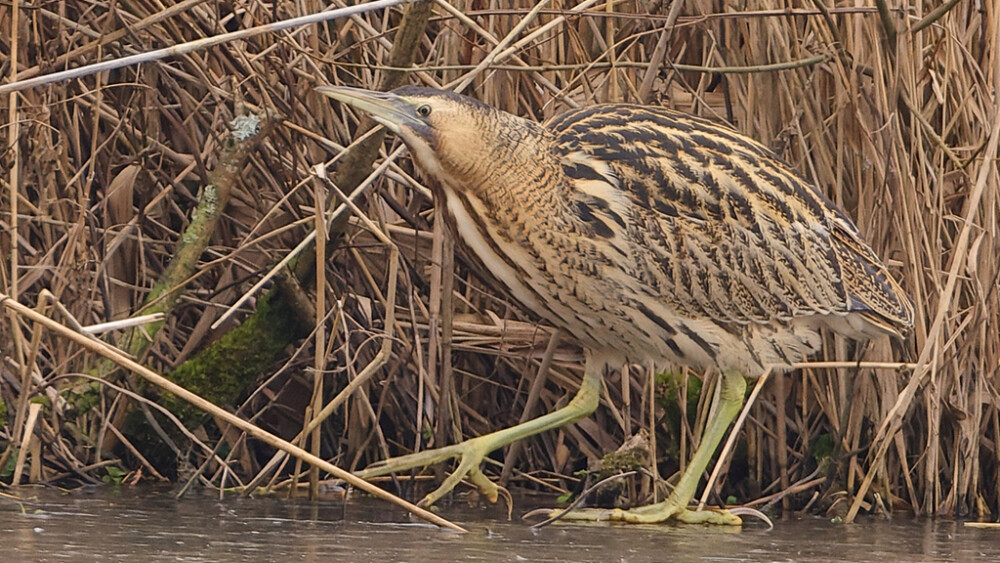
A bittern photographed from the Scrape hide by Mike Jerome January of 2024.
From the Long Hide to the Sand Martin Hide
There has been a hide here since Arundel Wetland Centre opened in 1976. It was originally known as the Long Hide.
In 1996, to mark WWT's 50th anniversary, the hide was named the Peter Scott hide and a 70 foot mural of WWT's history painted by Roger Oakes was installed.
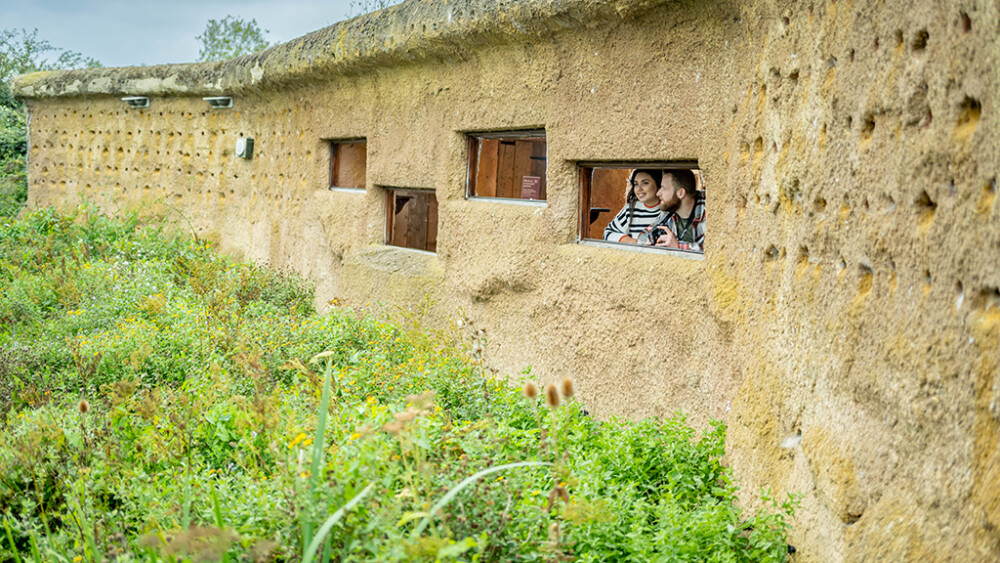
The original hide was demolished in 2009 and the Sand Martin hide, with its wings making up two artificial nesting banks, opened in 2010 for Sir Peter Scott’s centenary. (photo at the top of the article)
Today, the hide's 299 nest holes support the reserve's successful sand martin colony in spring and summer.
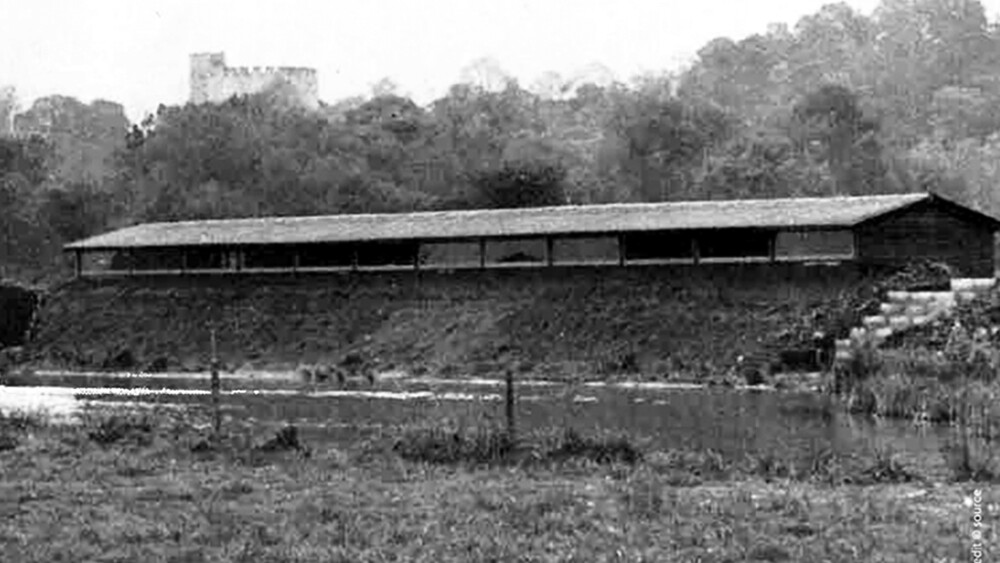
The Long hide when the site opened in 1976.
From Sussex Hide to Reedbed Willow Sphere
The original Sussex Hide opened from 1977, overlooking the remains of Arundel's historic watercress beds towards Arundel Castle.
The Great Storm of October 1987 tore the roof from the hide and damaged the building. Although repaired, it did not survive the winter floods of 2001. In 2010, the site was reimagined as the Sussex Screen, featuring a woven willow wall and fence.
The space evolved again in 2023, when WWT worked with Beautiful Wonder and Two Circles Design to create the Reedbed Willow Sphere, offering visitors a unique way to experience the reedbed habitat.
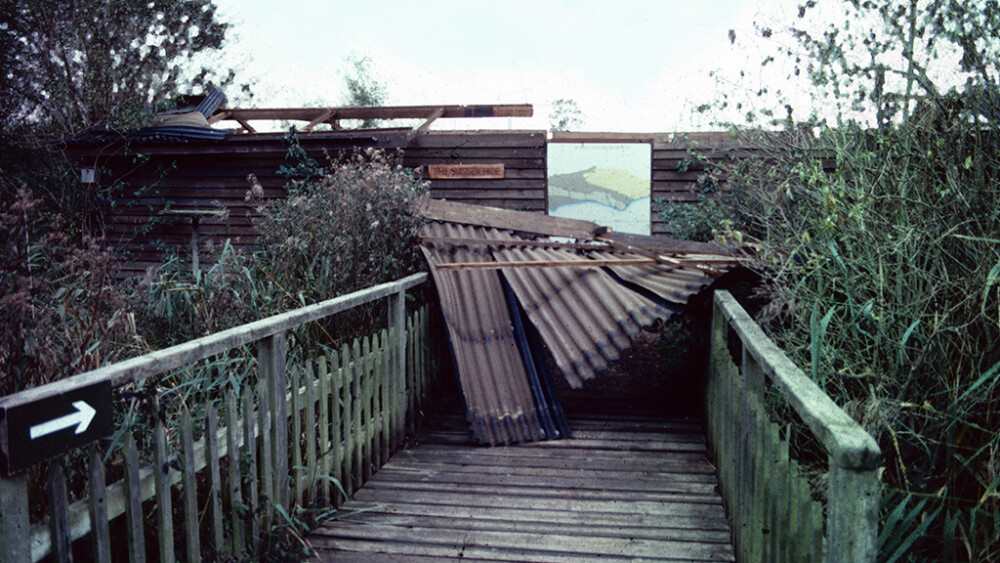
The original Sussex hide after the October storm damage in 1987.
The Ramsar Hide
This hide first opened in 1981. During its first winter, one of the coldest winters since 1963, WWT staff used the hide as a shelter for the centre's Orinoco geese, giving rise to its original name, the Orinoco Hide.
By the mid-1980s, it appeared on WWT maps as the Ramsar Hide, named after the Ramsar Convention, the international treaty for wetland conservation signed in Ramsar, Iran, in 1971.
Today, the hide remains a favourite wildlife watching spot, particularly in autumn and winter when visitors gather for some of the best kingfisher sightings on the reserve.
The Reedbed Hide
For decades, this spot has offered visitors a close-up view of the reedbed and its wildlife. The original Reedbed Hide was built in 1982, extending out into the reeds to immerse visitors in the habitat. After storm damage in 1989, it was rebuilt and reopened in 1990.
In 1994, a raised hide with an access ramp replaced the original structure, giving visitors elevated views of wetland birds, dragonflies and the changing seasons. Following its closure in 2023 due to subsidence, the Reedbed Viewing Platform opened in March 2025, continuing a long tradition of helping people connect with the wildlife of the reedbed.
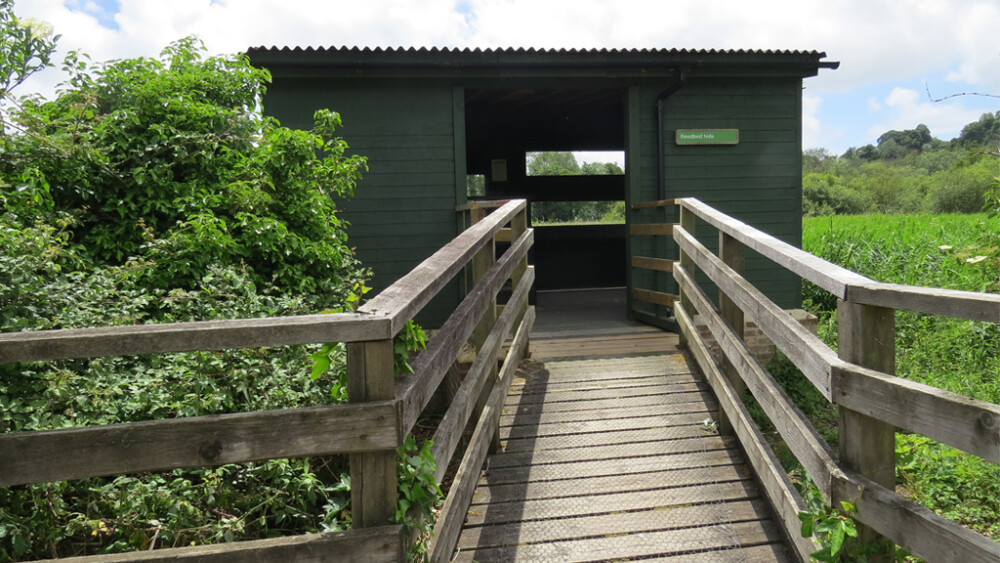
The second incarnation of the Reedbed Hide, seen here in 2019.
The Lapwing Hide
Built in 1987, it overlooked the Lapwing Scrape, from which it took its name. The hide was built with donations from Mrs. Millicent Smalley.
For a time, it was known as the Antarctic Hide, housing a display of Antarctic photographs by Frank Lazl and bringing a glimpse of a very different wetland landscape to visitors.
In 2010, the habitat in front of the hide was revitalised as wet grassland, with a network of shallow water channels created to provide valuable feeding and nesting areas for wetland wildlife.
The following year, the hide was refurbished and renamed the Andrew Dawnay Lapwing Hide in honour of WWT Arundel's first centre manager, who played a key role in designing the site.
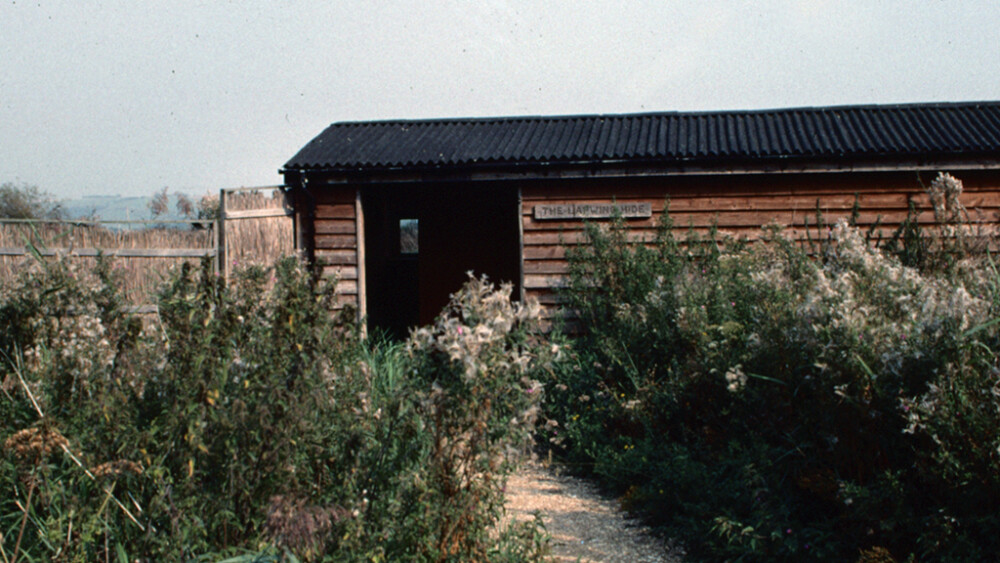
The Lapwing hide, photographed in 1990.
The Redshank Hide
Built in 1987 alongside the Lapwing Hide, the Redshank Hide was funded through the generosity of Mrs Millicent Smalley. It originally stood between the Ramsar and Lapwing Hides, across from the staff gate still used by WWT wardens to access the reserve.
The hide fell out of use during the 1990s and was later repurposed as a storage shed by the reserve team. It was removed in 2010 as part of the Wet Grassland Restoration Project, which helped create the thriving wetland habitat you see today.
The Discovery Hide
Built in 2013 as part of the Arun Riverlife Project, the Discovery Hide overlooks Swan Lake, one of the site's original exhibits, which was transformed into a lagoon inspired by the nearby River Arun.
Stretching out over the water, the hide offers excellent views of the kingfisher nesting bank and the wildlife-rich lagoon beyond.
Designed to welcome visitors unfamiliar with traditional bird hides, it originally featured carpet, soft furnishings and wildlife-themed wallpaper. These were removed after flooding in 2014 and 2015, but the hide continues to provide a comfortable space to connect with nature.
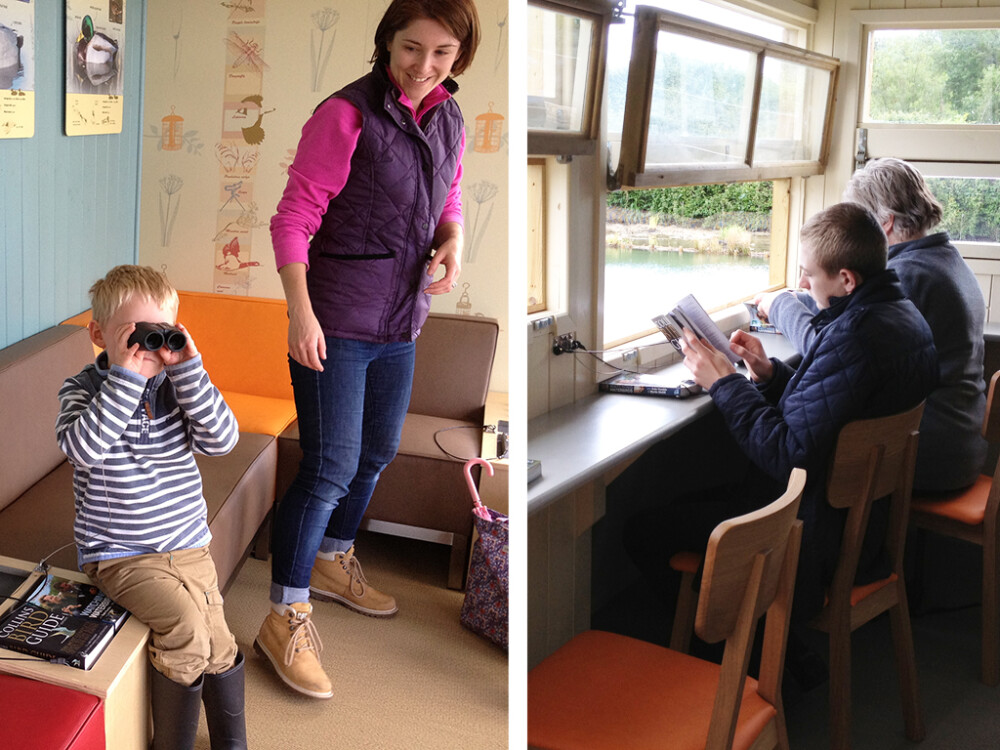
The Discovery hide on its Opening Day, June 16 2013.
Looking Back
From simple wooden shelters to modern viewing platforms and immersive wildlife experiences, WWT Arundel's hides have evolved alongside the reserve itself. Each has offered its own window onto the changing seasons, remarkable wildlife and special moments that visitors have shared with nature.
Some may have disappeared, while others have been transformed, but together they tell the story of WWT Arundel and the wetlands it was created to protect. As we celebrate the centre's 50th anniversary, these viewpoints remind us that sometimes the best way to experience nature is simply to sit quietly, watch, and wait for wildlife to come to you.
More to come
This is the second in a series of articles celebrating the 50th anniversary of WWT Arundel Wetland Centre. Throughout the autumn, we'll be exploring the milestones that have shaped the centre over the past five decades, from its creation to the thriving wetland reserve enjoyed by visitors today.