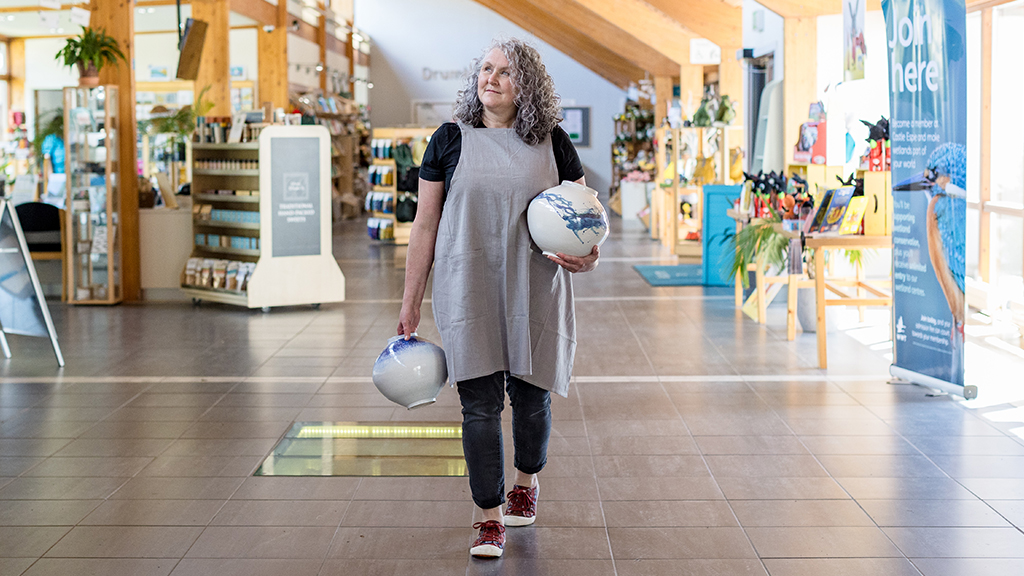
As the site’s resident artist, Tracey invites people to connect with the landscape, but not just what we can see or hear. Her exhibition ‘From Coast to Clay’ has been exhibited at Castle Espie’s Graffan Gallery, Ireland’s only dedicated environmental arts space.
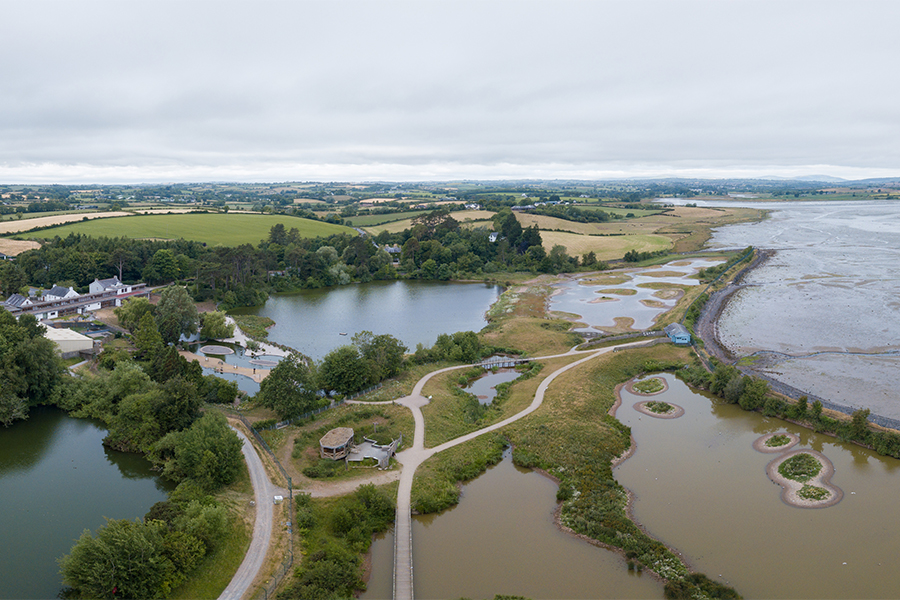
‘From Coast to Clay’ takes in Strangford Lough as a holistic whole, where Castle Espie perches on an outcrop of pink limestone on its north-western shores. The exhibition peels back the layers of time and terrain to explore what’s below the surface.
“It wasn’t good enough for me to represent the land in paintings. I wanted to make space for a representation of what the land is,” says Tracey.
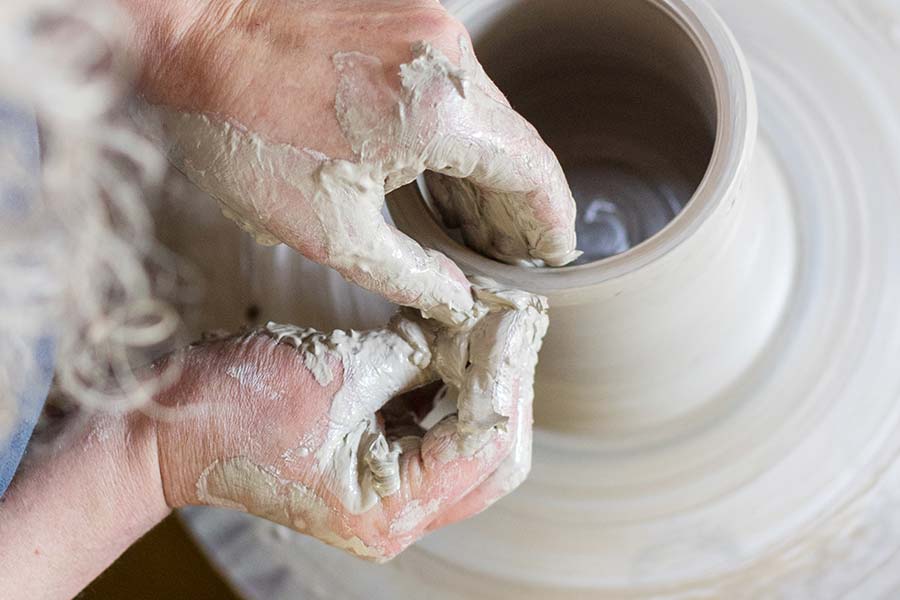
Some of Tracey’s work is thrown from local clay, which historically made the area prosperous with lime quarries, brickworks and a pottery at Castle Espie.
“You can’t ignore the site’s history. It’s a living archive of stories and ancestral traces,” says Tracey, “and those histories have in turn shaped the landscape.”
Nature’s reclamation
‘Bricks and Lime’ is one of these pieces that reflect the site’s history – the terracotta and lime-like glaze echo Castle Espie’s industrial past, with over two hundred men, women and children working coal-fired kilns.
“The Otter’s Pond used to be the clay pit – it kept flooding, and they could never reclaim it,” chuckles Tracey. “Nature took it back.”
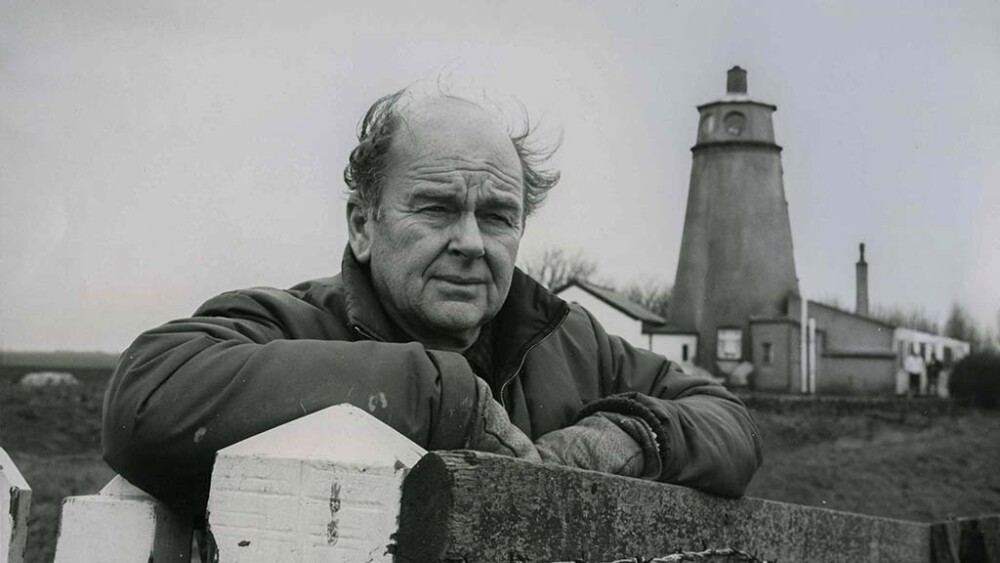
The story today is very different. Initially created by industrialist and conservationist Paddy Mackie in the 1970s, Castle Espie has been managed by WWT since 1989, gradually encouraging wildlife back onto this rocky outcrop and reclaiming what had been lost.
Another of Tracey’s pieces that reflects this reclamation is ‘Nendrum’ – named after the ruins of a medieval monastery that sits on Mahee Island in Strangford Lough. Attacked by Vikings as they battered Ireland’s east coast in the eighth and ninth centuries, parts of the walls still stand, covered in white lichen.
Wetlands and who we are
Tracey’s work also has an urgency. It reminds us that as human beings, we should be in conversation with the water: listening and soaking in the stories of it's past to help determine our futures.
As a wild swimmer, Tracey’s work, too, reflects that access to healthy wetlands aren’t just a nice to have: they’re essential for wellbeing and a sense of who we are.
“Wetlands are liminal spaces,” says Tracey, "and healthy wetlands are a living source of my inspiration. They’re where I learned to see differently. Their margins shift and it’s never still at Castle Espie. They’re where you find yourself between the moments of everyday life.”
“Yet most of Strangford Lough is inaccessible or privately owned. However, WWT offer everyone the right to see it.”
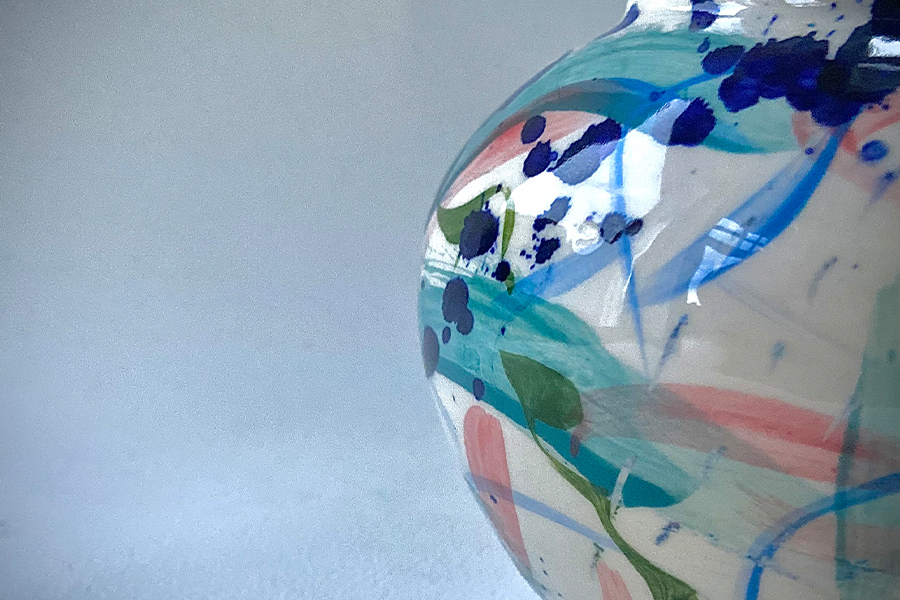
Tracey’s floating pots represent this need for the water: “I sought to encapsulate the liminal space that fuels our need to swim. It includes motion and emotional marks, representing not only face slapping of waves on wild water, but also the unpredictability of life.”
The pots are then floated on the water of Strangford Lough before they’re sold, a perfect meeting of land, water, and belonging.
“My work is an ongoing conversation with this place,” says Tracey, “a dialogue between land and water, craft and conversation, heritage and stewardship.”
As World Wetlands Day approaches on February 2nd, Tracey’s work is a powerful reminder that cultural heritage is deeply intertwined with wetlands, and by honouring it, we can seek to understand and interact with wetlands in their entirety: what they are, have been, and mean to the people that live with them. Cultural heritage and traditional knowledge are key parts of WWT’s ambition to restore 1 million hectares of wetland habitat across the globe.
Find out more about Tracey’s work on her website.
Celebrate World Wetlands Day
For World Wetlands Day this year, we’re exploring culture, heritage, and traditional knowledge in wetlands.
On 2 February, the world comes together to celebrate wetlands and we’d love you to be a part of it.
Discover more