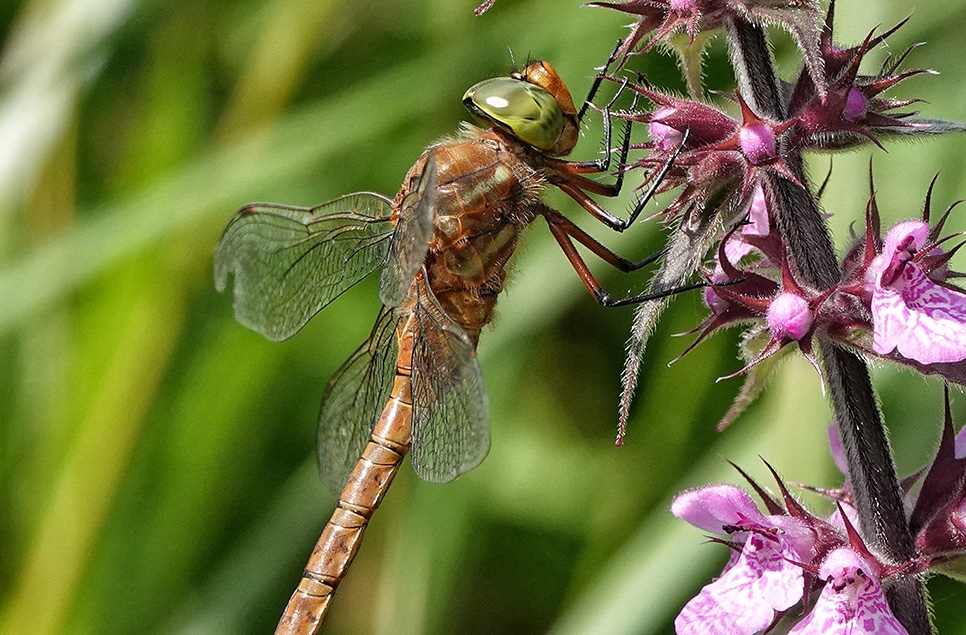
Dragonfly delights at WWT Steart Marshes
At WWT Steart Marshes in Somerset, you can find up to 23 species of dragonfly. The site combines freshwater wetlands with tidal creeks and saltmarsh. It was opened to the public in 2014 and within five years was recognised by the British Dragonfly Society as a Priority Site of National Importance for Dragonflies. The phrase “build it and they will come” springs to mind!
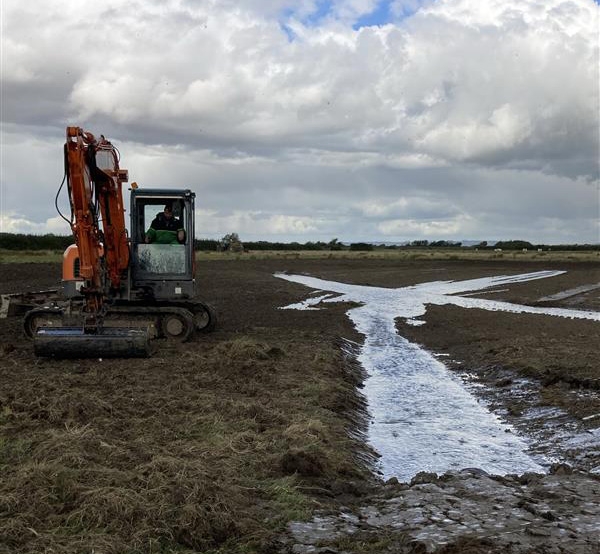 WWT Wetland creation at WWT Steart Marshes - Leigh Marshall
WWT Steart Marshes was then designated as a Dragonfly Hotspot in 2022. As a newly created site with a respectable 12 species of breeding dragonflies, WWT Steart Marshes demonstrates the importance and need for wetlands.
A dragonfly hotspot where wetland restoration meets climate change adaptation
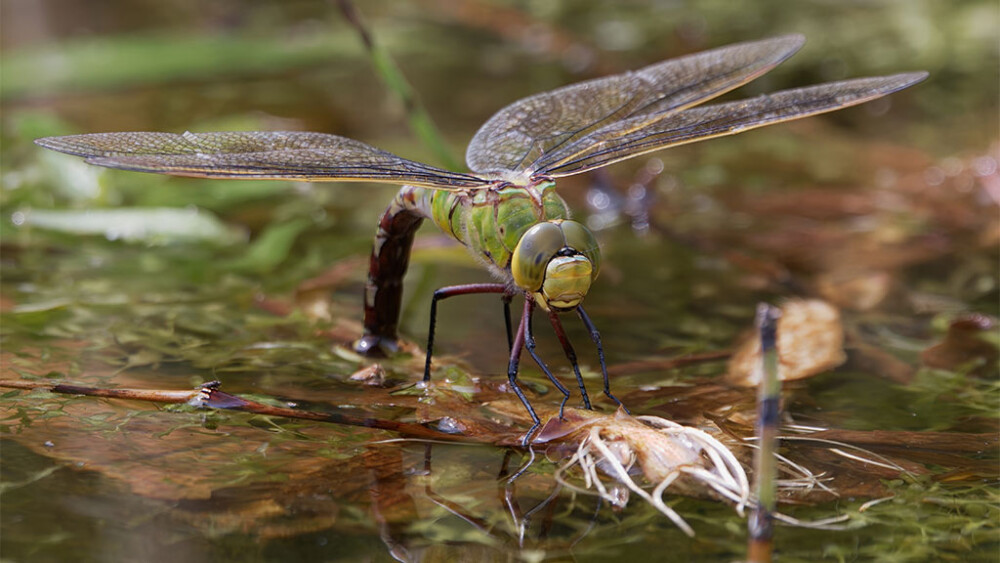
In 2016, WWT Caerlaverock was one of the first Dragonfly Hotspots to be announced. Its freshwater pools are home to 13 breeding species, with banded demoiselle and southern hawker being the latest to move in as climate change pushes species further north – and more are expected to take up residence in the coming years.
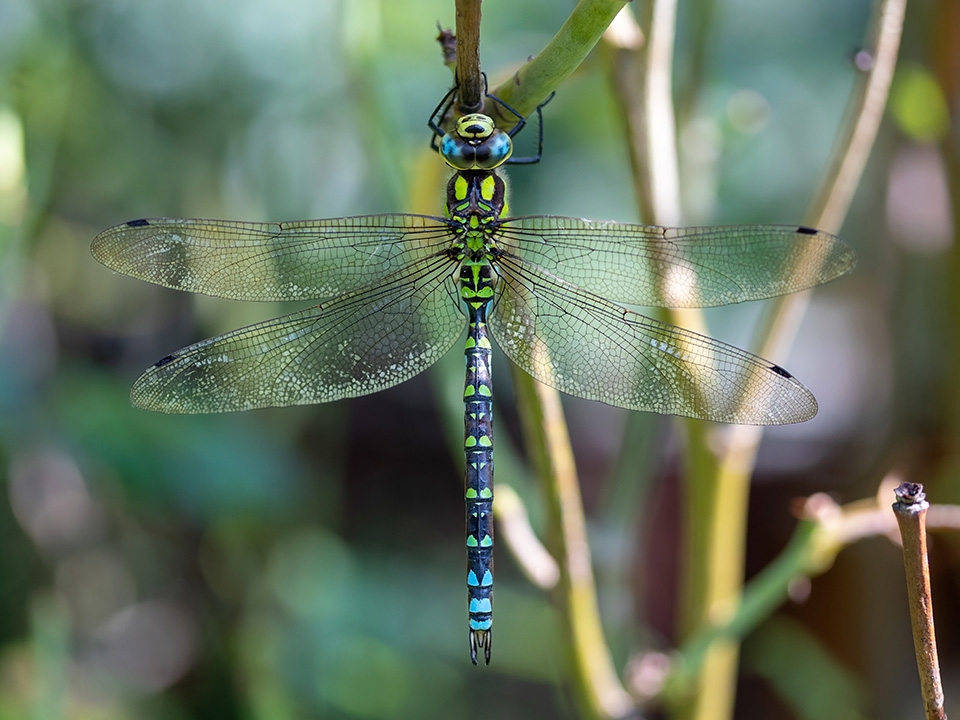 Southern hawker
The Caerlaverock team are working across the reserve to rotate the clearing out of ponds each year to prevent them from becoming choked with vegetation and to create a variety of habitats. They’re also establishing new ponds, rainwater gardens and mini wetlands around the visitor centre. As part of their landscape wetland restoration project they’re creating lots of new wetland features such as scrapes and channels.
These should eventually be used by dragonflies as well as other species like natterjack toads.
Explore dragonfly havens
WWT wetlands are fantastic places to watch dragonflies – not only due to the sheer variety of species! The sites are designed to bring people closer to nature - not just through the range of experiences and activities, but also the physical layout of paths that take you close to the water and weave in and out of wetland habitats.
| Total breeding species (2014-2024) | Total species recorded | |
| WWT Arundel | 14 | 26 |
| WWT Caerlaverock | 13 | 16 |
| WWT Castle Espie | 2 | 5 |
| WWT Llanelli | 16 | 22 |
| WWT London | 19 | 26 |
| WWT Martin Mere | 12 | 17 |
| WWT Slimbridge | 18 | 26 |
| WWT Steart Marshes | 12 | 23 |
| WWT Washington | 12 | 28 |
| WWT Welney | 19 | 23 |
A hidden wetland oasis in the heart of the city
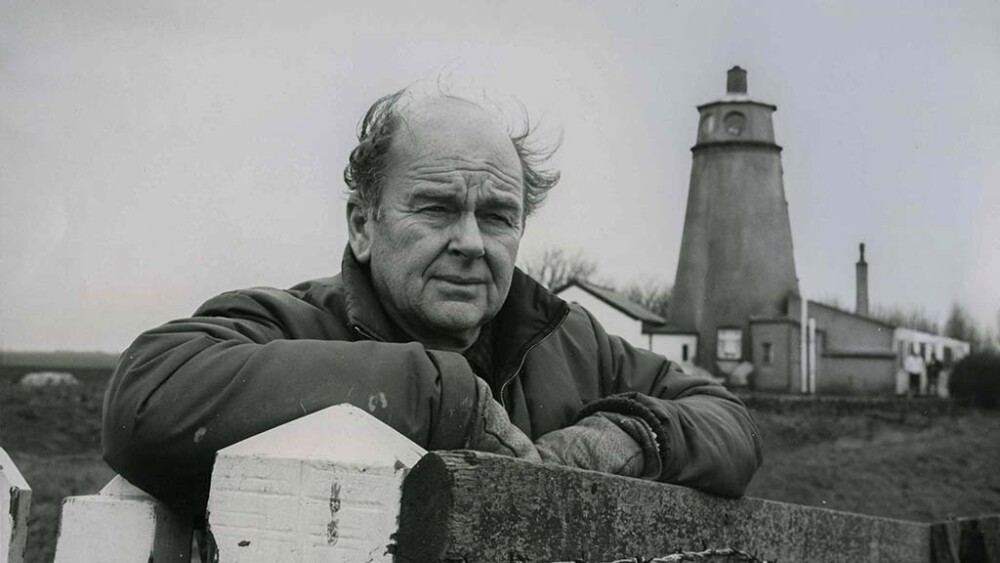
WWT London is a purpose-built urban wetland, in the heart of a concrete jungle. This was Sir Peter Scott’s vision: to bring nature to the people. It needs year-round maintenance to ensure it stays as the ideal wildlife oasis and our reserve team follows an annual schedule of tasks to keep everything in check. Surrounded by the hustle and bustle of south-west London, it’s the perfect place to inspire people about wetlands and nature – and for me, the perfect place to work!
Celebrating 25 years of success
This year WWT London is turning 25; it’s come a long way from the grid of concrete reservoirs that were demolished back in the 1990s.
It leads the way in WWT sites with 19 breeding species of dragonfly and 26 recorded in total. The work of reserve manager Adam Salmon and his team was rewarded in 2023 when we were officially launched as a Dragonfly Hotspot. For me this was exciting for many reasons, but being lucky enough to see some of the new species arrive and be added to the list was certainly my highlight!
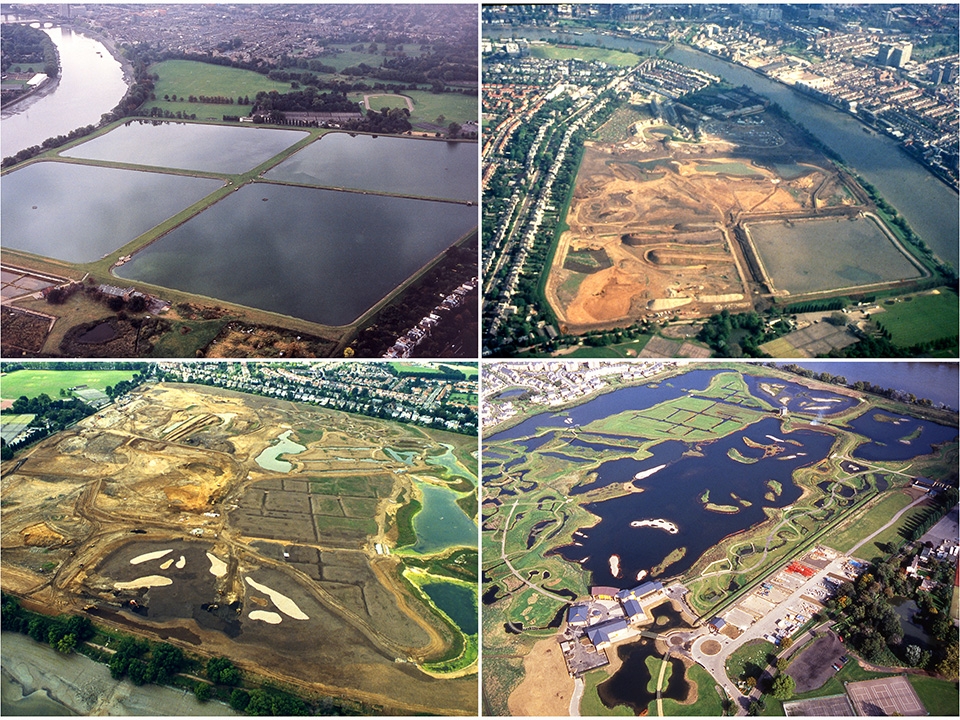 London Wetland Centre, before and after
From willow emeralds to Norfolk hawkers
Seeing the passion and excitement WWT staff and volunteers have for the places they work and love and seeing all the hard work pay off is what it’s all about. Personal highlights have ranged from searching for willow emerald damselfly egg scars in 2016 (and finally spotting them just as I realised my chest waders were leaking!) to the excited 2019 radio conversation from opposite ends of a pool that confirmed we weren’t watching the same Norfolk hawker, but there were in fact two.
Knowing these species are here because we created the perfect home for them, and they found it, is simply exhilarating. Both willow emerald damselfly and Norfolk hawker are now established breeding species on site – the latter hitting a record high of 15 individuals on a transect count in mid-June 2024. Lesser emperor is also breeding, and scarce chaser may be next to follow. The next few years could well be very exciting for dragonflies at WWT London.
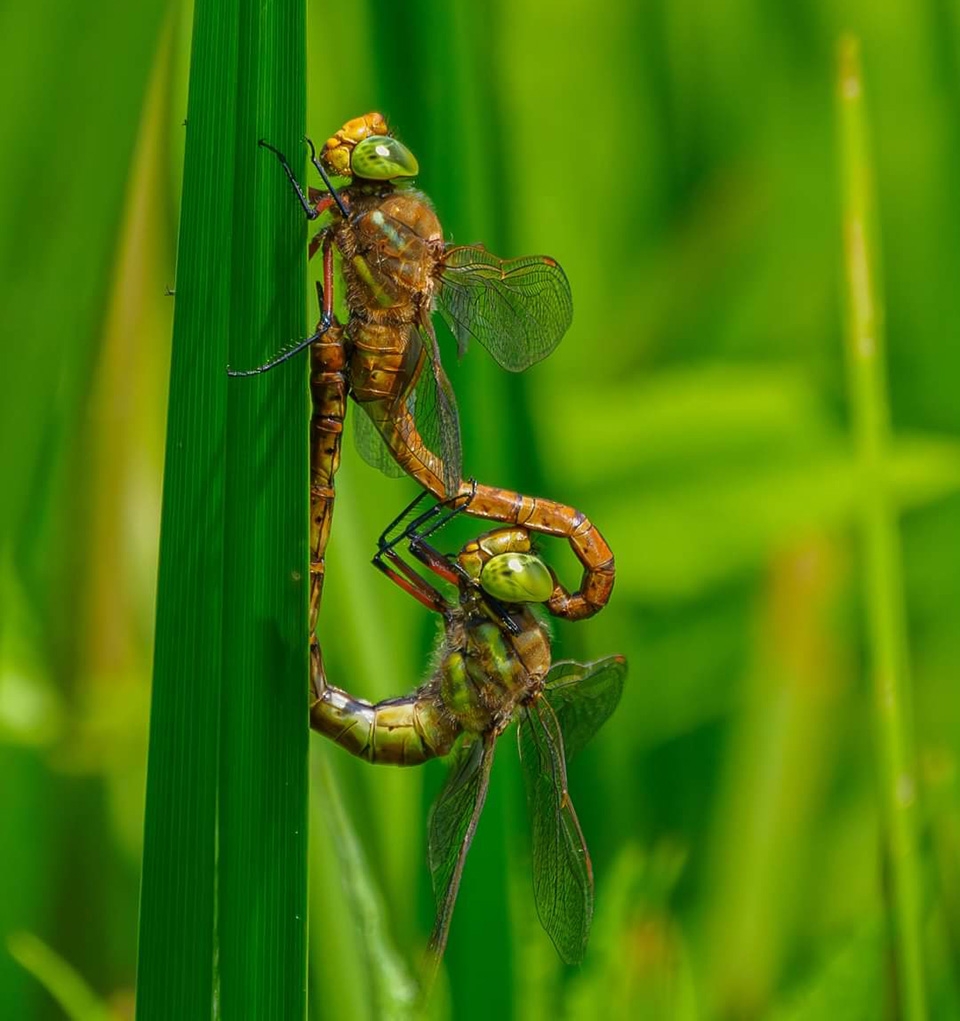 Mating pair of Norfolk hawkers at WWT London – Gary Gray
Helping nature burst back to life
The presence of all these different dragonfly species just goes to show what amazing, healthy wetlands we’re caring for, and at WWT we want to shout about that! Wetlands are amazingly biodiverse habitats that can literally help nature burst back to life. I created my own pond on my allotment in January 2024, and it’s already packed full of dragonfly larvae. I can’t wait for them to burst into the world above the water over the coming years!

A summer of events and activities at WWT’s Dragonfly Festival
Celebrate dazzling dragonflies during the summer holidays. Enjoy wondrous experiences and the opportunity to learn more about British dragonflies and the amazing wetlands they live in.
Families can discover a vibrant line‑up of festival experiences - from pond dipping and adventure play to dragonfly safaris and creative art workshops. There’s something to spark curiosity in every young explorer.
I can’t wait for warmer days and a return to spending sunny afternoons spotting my favourite insects. I hope you’ll fall in love with them too!
Find out more about our celebration dragonflies at the Dragonfly Festival at WWT wetland sites across the UK.
Tell me moreThis feature first appeared in the April 2025 edition of the British Dragonfly Magazine. The British Dragonfly Society is the voice for dragonflies in Britain, working to conserve dragonflies and their wetland habitats.