This week on the reserve here at Martin Mere, waterbirds from the European continent and beyond continue to arrive as they settle in for the Winter.
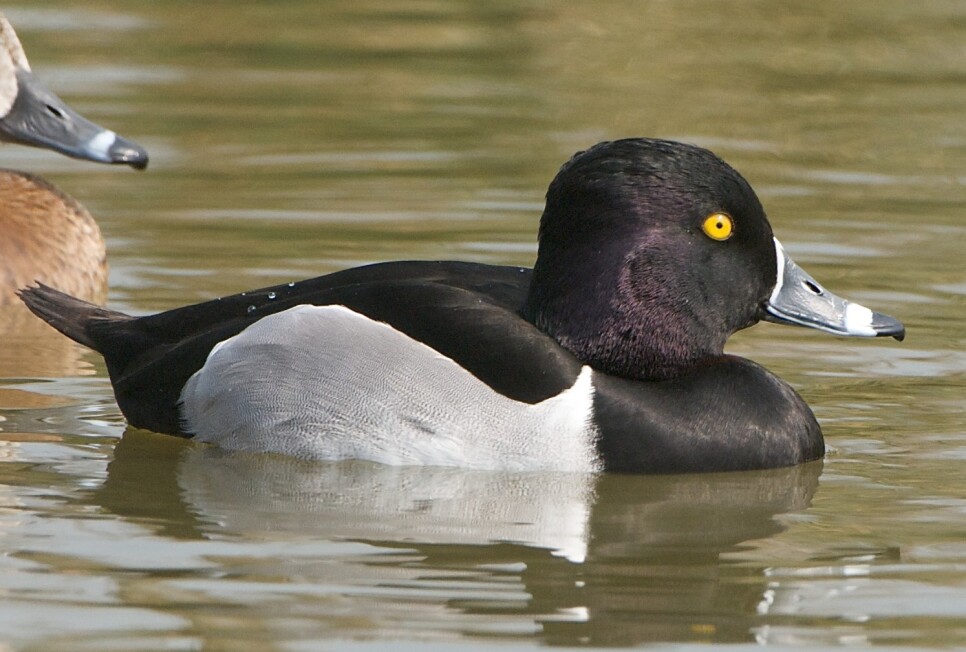
1 Ring-Necked Duck male is still present on the mere, and has been seen for the past week. This bird is a North American equivalent of our native Tufted Duck and a rare vagrant bird to the U.K., with only around 35 wild individuals seen annually. The best ways to tell this duck apart from its Tufted Duck relatives is by comparing the unusual 90° angle-like crest at the back of its head, the unique silver and white colour on its flank, and the ornate white 'W' pattern at the base of its beak to those areas seen on our male Tufted Ducks in their Winter plumage, which instead possess a thin feathery crest on the back of their heads, a pure white colour on their flanks, and no white pattern in the base of their beaks.
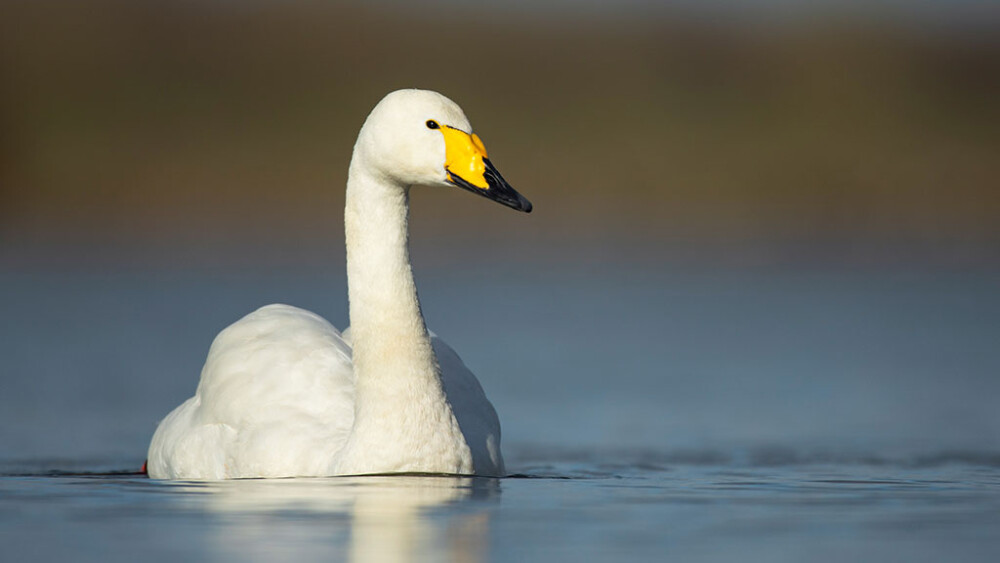
Migratory wildfowl such as Whooper Swans, Pink-Footed Geese, Wigeon, Pintail, Shoveler, Pochard, Tufted Duck, Shelduck, Teal, Mallard, and Gadwall continue to be seen in their hundreds on the mere. Other birds found on the mere recently include 1 Dunlin, 4 Cormorants, 1 Lesser Black-Backed Gull, 1 Buzzard, and 1 Little Egret.
Swallows and House Martins can still be spotted occasionally around the reserve catching insects on the wing. These birds arrive in the UK to breed during the Summer months, and most of them have already returned to Africa, though a few remain on site.
4 Goldcrest and 10 Long-Tailed Tits were seen at Janet Kear hide today. Further up the footpath at Harrier hide, 3 Cetti's Warblers were heard. These birds are relatively common here, but are rarely ever seen out in the open.
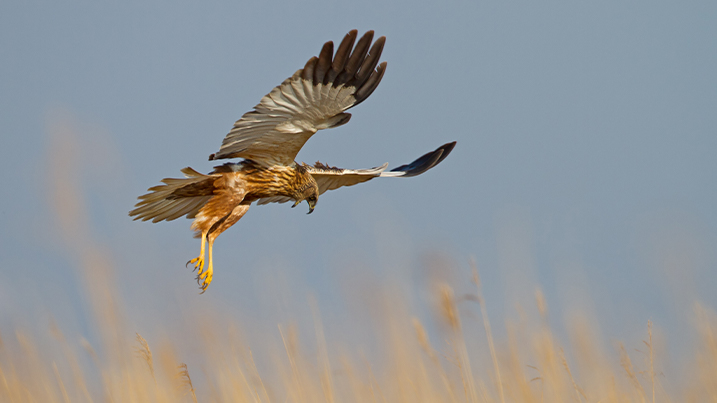
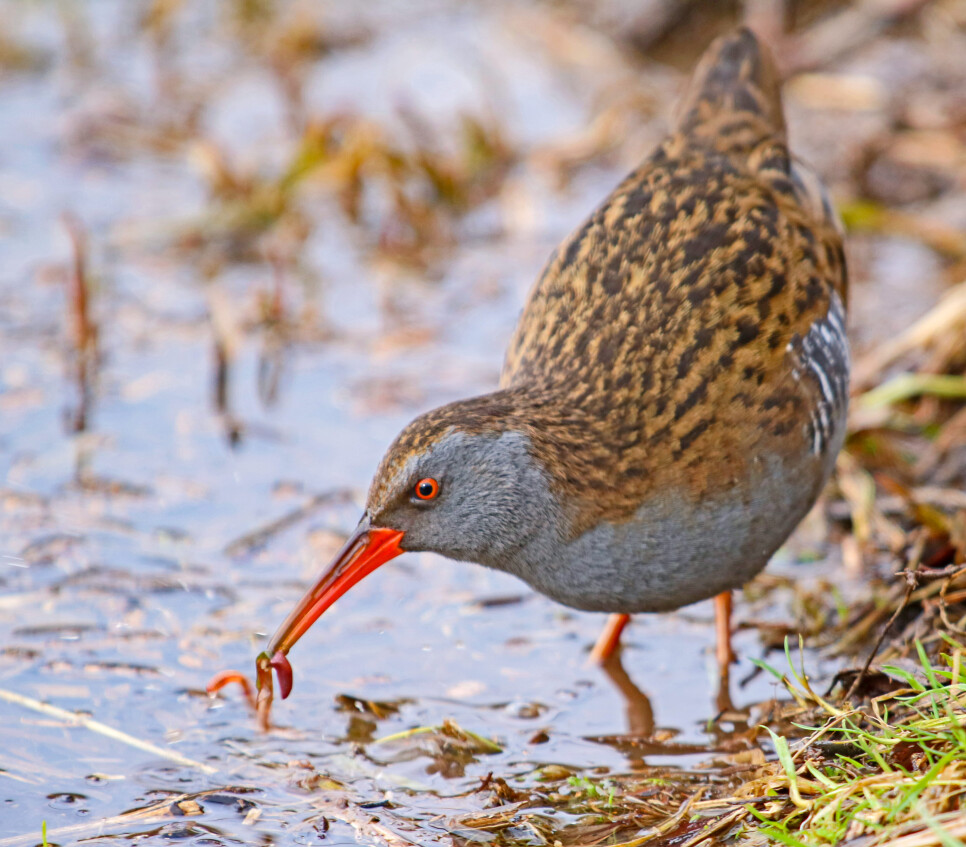
At the United Utilities hide, 1 Kingfisher male, 10 Cattle Egrets, 1 Grey Heron, 2 Reed Buntings, 1 Kestrel, 1 Marsh Harrier female, and 2 Treecreepers were observed, with 1 Water Rail being identified by its squealing call coming from inside the sluice running in front of the hide.
Photograph of a Water Rail.