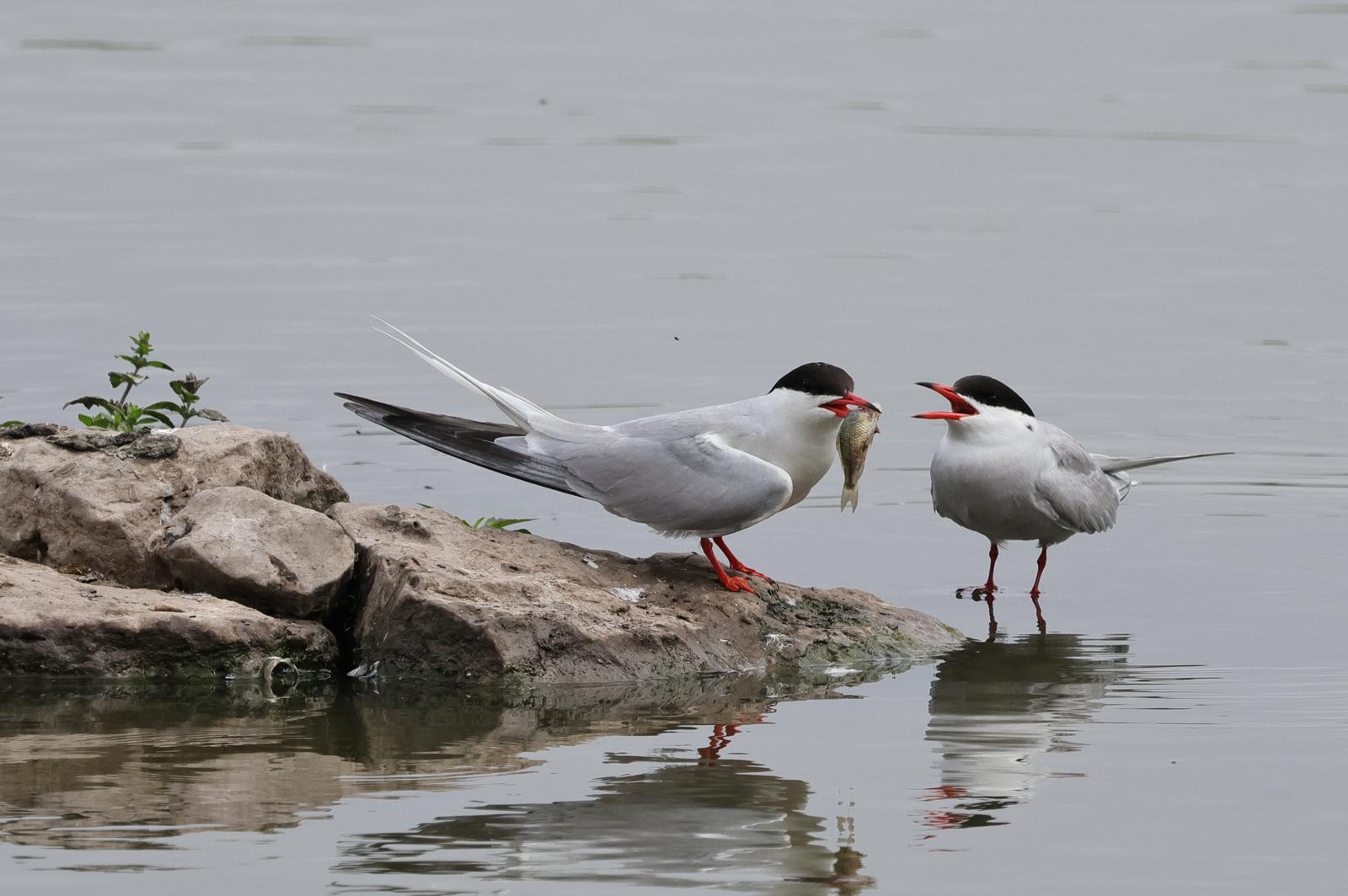
This month, a summer migrant to the WWT Slimbridge reserve takes centre stage. Cover image of a pair refusing to share breakfast by Dot J.
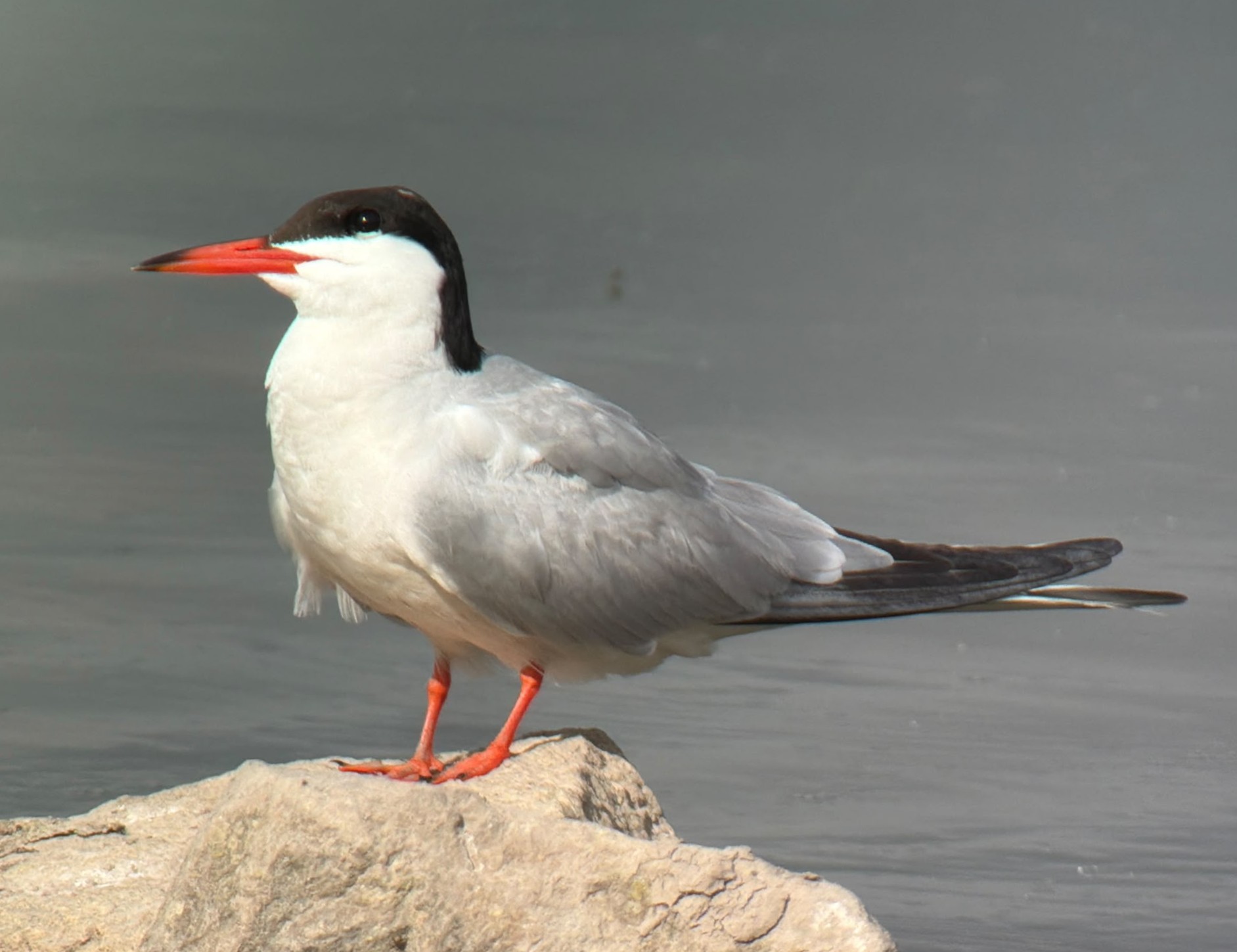
The first common terns were seen in May this year, and since then there have been regular sightings on the Rushy and South Lake, as well as from the Estuary Tower Hide. The common tern can be identified by its silvery grey upper body, white under belly, distinctive black cap, and red bill. Its long forked tail and graceful aerial displays earn it the nickname 'sea swallow'. They're a little bit tricky to distinguish from the Arctic tern: look out for a longer bill with a black tip, and darker outer wing feathers.
The common tern's Latin name Sterna hirundo comes from their Old English name of Stearna, and 'hirundo' which clasically refers to any fork-tailed bird that flies fast and low. Despite its name, the common tern is classified in the UK as Amber under the Birds of Conservation Concern 5: the Red List for Birds. This is mainly due to ongoing pressures on their coastal and inland habitats, which is why WWT Slimbridge and other WWT wetland centres have been deploying special tern rafts over the breeding season.
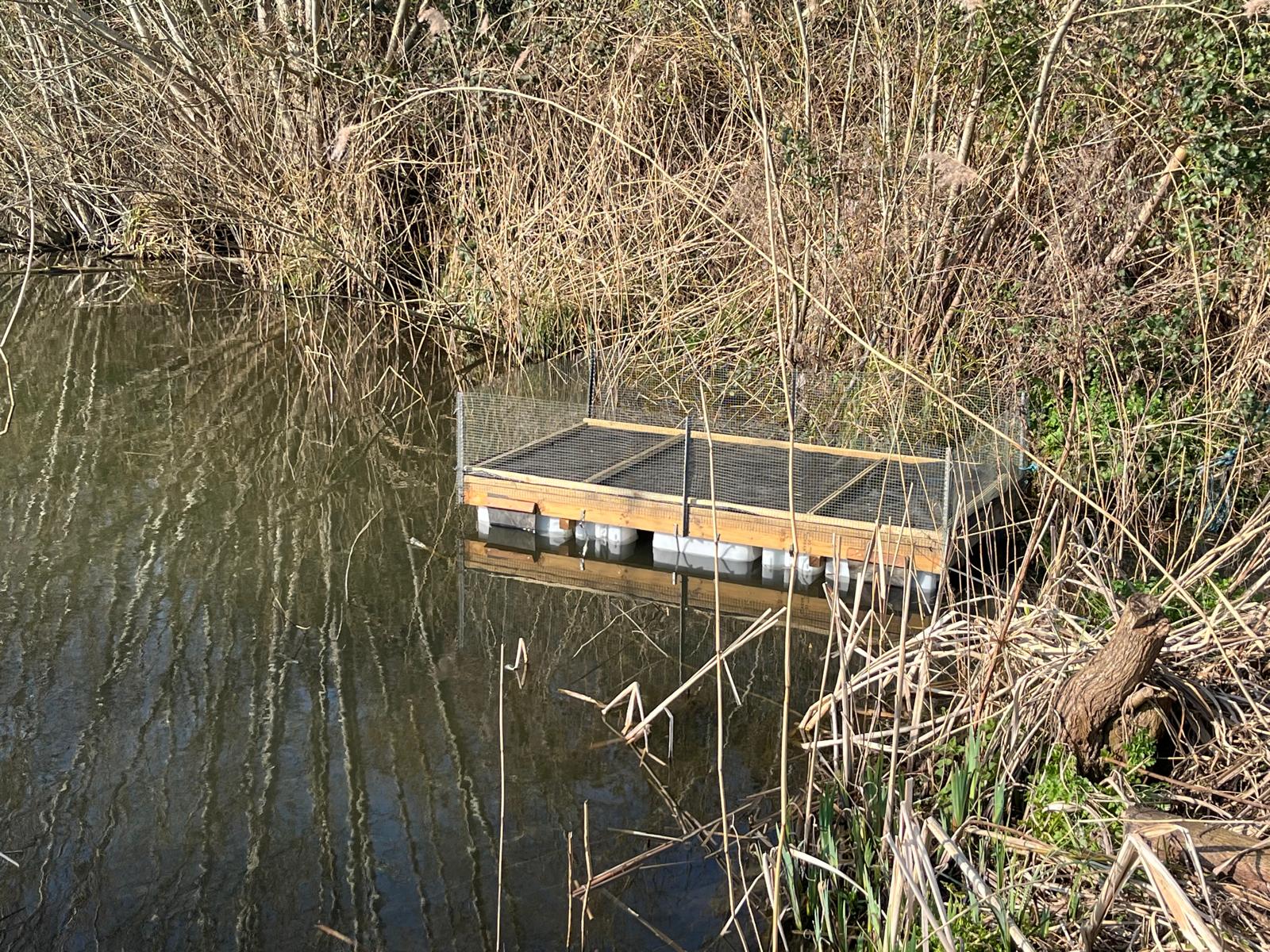
These floating structures act as artificial islands where nesting terns will be safe from many of the threats found along natural shorelines. Unfortunately tern rafts are attractive to breeding gulls too, so deployment is carefully timed to match up with when pairs are seen displaying and performing their fishy courtship rituals. In March, a tern raft handbuilt by the Reserve Team was deployed on South Lake. Thank you to Dursley Birdwatching and Preservation Society for the funding of this project!
Quick-fire common tern facts:
- They have one of the longest migrations of all birds, with an average round trip of 35,000km each year.
- Common tern colonies can be as large as 20,000 birds. They often cohabitate with roseate and Arctic terns.
- In the breeding season, common tern colonies can perform a strange behaviour known as 'dread': most of the terns will suddenly take to the skies and fly low over the colony. This may be to deter predators, but may be for no reason at all!
- They have adapted to nesting in an exposed environment where losing a nest is likely, and have incredible memories. Studies have shown that they can find their eggs even if they have been completely buried.
- Like most tern species, they are very protective over their nests and will noisily attack intruders. If a nest is threatened by rising water levels, they will quickly anything they can find like vegetation or shell fragments to raise it above the flood level.
- They can hover in midair before diving to catch a fish by beating their wings rapidly, and look like little angels with their wings outstretched.
In a few weeks the breeding season will be over, and the common terns will start their gruelling journey back to the coasts of the tropics and the southern hemisphere where they will spend the winter. Come and see them this summer before it's too late!
Check back next month for another feathered feature!
Is there a specific bird on site that you'd like to learn more about? Nominate them as our next 'bird of the month' by sending us a message on social media.