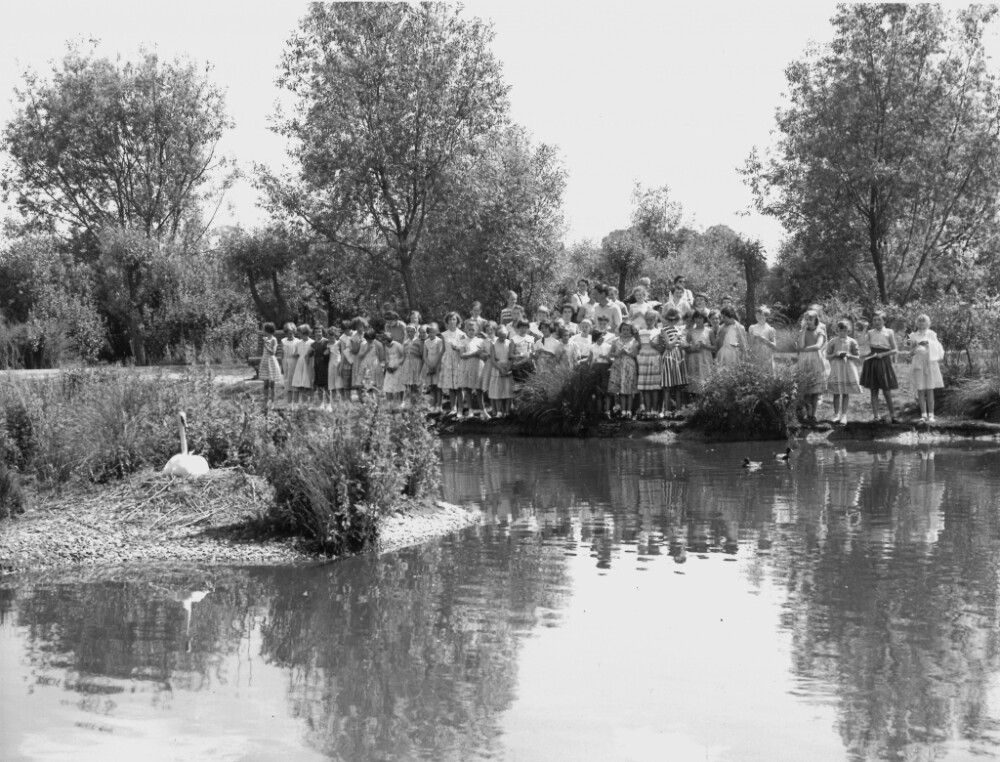
Rosemary Sharpe is the chair of the Waterfowl Association and has been a member here for nearly 80 years. She works regularly with the Living Collections team, and used to know Sir Peter Scott. We asked her to share her own Slimbridge story for our 80th anniversary. Cover image shows a group of children at Slimbridge Wetland Centre in the 1950s, credit WWT.
What is your earliest memory of WWT Slimbridge Wetland Centre?
"Aged five I visited WWT Slimbridge in December 1946, a month after Sir Peter Scott opened it to the public. We became family members and I have been a member ever since. I do remember shaking hands with Sir Peter Scott but I am sorry to say any photograph has long since disappeared."
How did your involvement with Sir Peter Scott and the WWT begin?
"My interest in wildfowl started many years ago when my grandfather owned a house with a lake in Devon where he kept many different species of wildfowl. The lake is still there and was built by Sir Francis Drake in the 1750s. At this time my grandfather gave me a pair of black swans which I fed and looked after from the age of two."
"Obviously my father inherited my grandfather’s interest in wildfowl, and now I have had a lifetime of interest. Quite by coincidence my father was also an artist painting and drawing wildfowl. There was gap while I was away at school and then working when my visits to WWT were less frequent but always a great interest and I still visited frequently to help study the birds. During this time I did have a pair of Muscovy ducks as pets!"
"In 1982 because of previous visits I got to know Martin Brown (Animal Health Officer) and took an injured wild bird to him for advice. In 1983 I then became a dedicated owner and breeder of wildfowl and my links with WWT became much stronger, visiting to gain advice and watch all the different breeds in captivity. As I got more involved with WWT I gave donations of birds and eggs, also my family’s Northcott Trust donated money for many years and still do."
What is your favourite memory of WWT Slimbridge?
"My favourite memory connected to WWT was when Nigel Jarrett (Conservation Breeding Manager) visited me at my home where he was amazed as to the success I had with breeding long-tailed ducks. I also loved visiting the Top Hut and seeing all the different breeds of young ducklings. In truth I have too many special memories to mention!"
What is your favourite species here and why?
"I think I have been motivated in my support of WWT by making friends with so many Avicultural staff over a long period of time and visiting so many different species of wildfowl. My favourite species of wildfowl consist of long-tailed ducks (a challenge to breed and rear), bronzewings (initially hard to find and took several years before they bred successfully, then northern pintails and marbled teal... to name but a few!"
What is your favourite conservation story from Slimbridge?
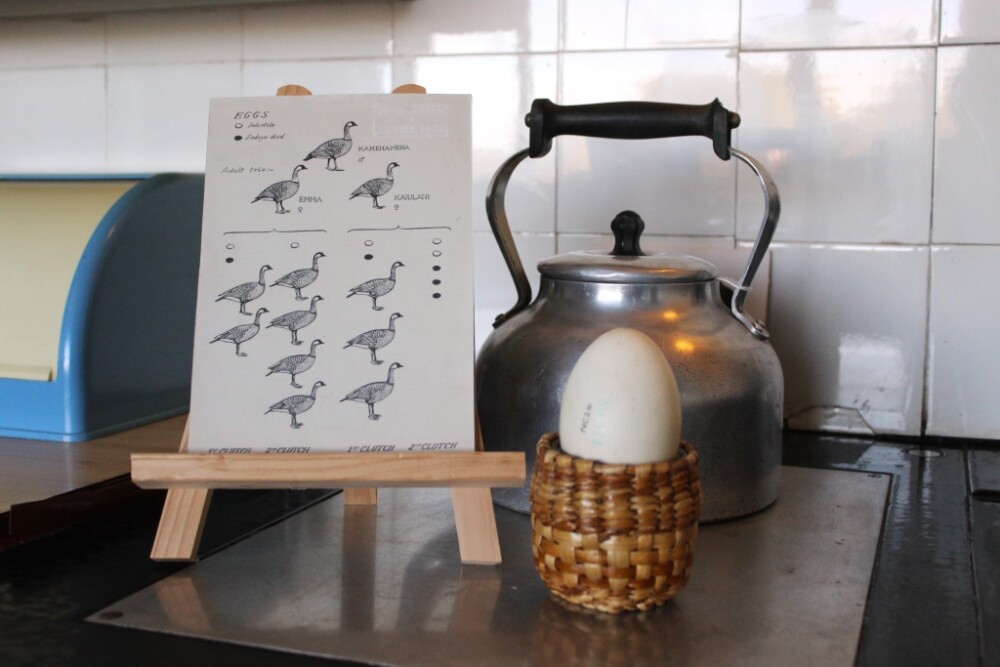
"As far as conversation goes, in the early days Laysan teal, marbled teal and bronzewings were amongst some of the most endangered species, but other species are in need of conservation. Then of course the Nene geese saved by Sir Peter Scott are still my favourite geese. WWT’s conversation of wildfowl is a priority never to be forgotten."
Discover more of WWT Slimbridge's history at the Scott House Museum. Tours can be booked in advance online here, or you can drop in anytime from 10:30am to 4:30pm on Saturday the 14th and Sunday the 15th of November.