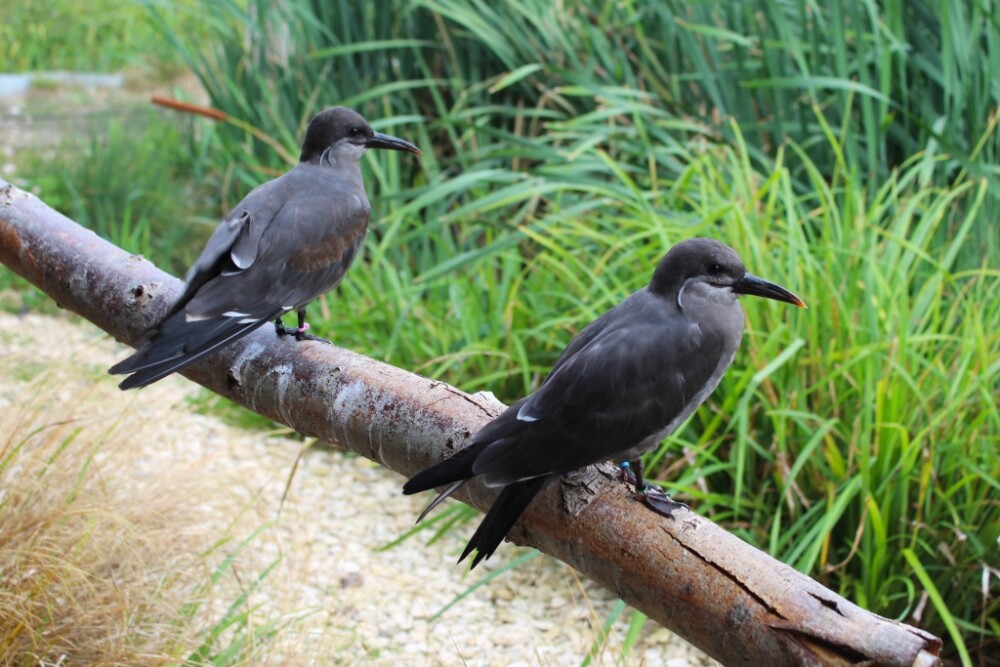
This month, we're getting up close and personal with a new addition to our Living Collection: the quirky Inca tern (Larosterna inca).
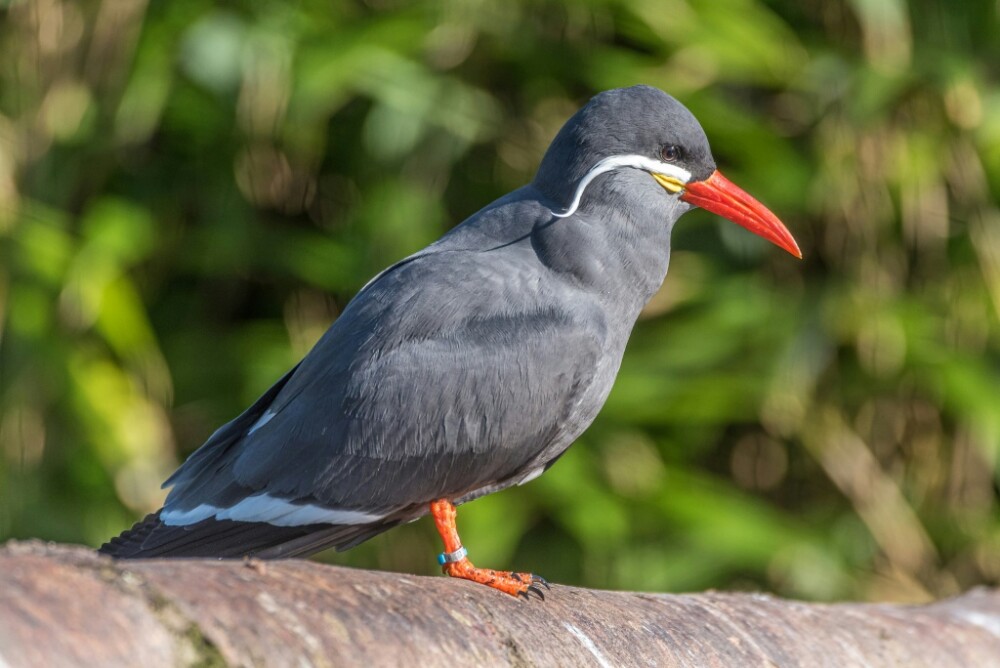
Earlier this year, a pair of juveniles joined the flock in the WoW Aviary. As seen in the photo above, their 'moustache' feathers are still grey, and they haven't developed their striking red bills or red legs yet. The photo below shows what they'll look like when they grow up:
Quick-fire Inca tern facts:
- The only members of the genus Larosterna, they are most closely related to the genus Sterna which includes Arctic, common, and roseate terns
- Usually found in large colonies on rocky cliffs and islands along the Pacific coast of Peru, Chile and Ecuador
- Classified as a near-threatened species due to a decreasing population size, perhaps impacted by El Nino weather patterns
- Very vocal in nesting colonies, with calls ranging from raucous cackling to mewing like a kitten
- Unfussy nesters: will breed from April to July and October to December using caves, abandoned penguin burrows, and manmade structures
- Both males and females incubate the 1-2 eggs and provide for the chicks
- Feed primarily on small fish which they dive gracefully for in feeding flocks of sometimes more than 5,000 birds
- The length of their long white 'moustache' feathers may signify health as brightly coloured plumage requires lots of energy
You don't need to go as far as South America to see an Inca tern for yourself though! You can meet them right here in Gloucestershire. Head to the WWT Slimbridge WoW Aviary next to the Andean and lesser flamingo house. They're very curious, so if you're lucky they might perch quite close to you...
Check back next month for another feathered feature
Is there a specific bird on site that you'd like to learn more about? Nominate them as our next 'bird of the month' by sending us a message on social media.