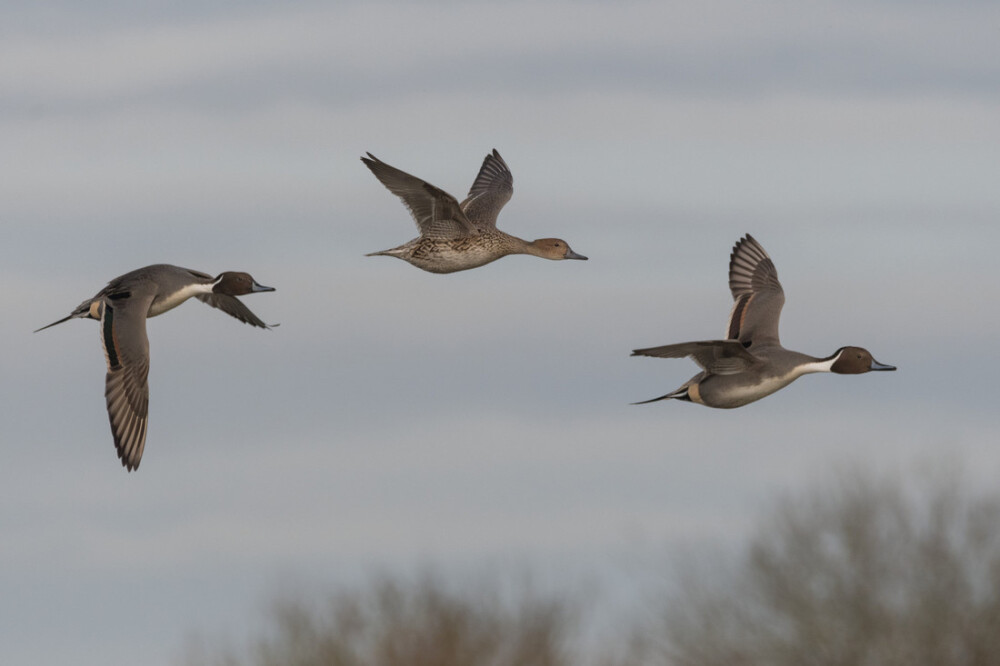
This month, we're focusing on an iconic autumn species at WWT Slimbridge: the pintail. Cover image of a small flock in flight (female in centre) by Alec Taylor.
Pintails, sometimes called northern pintails, are now typically given the binomial nomenclature of Anas acuta, with anas meaning "duck", and acuta coming from the verb acuere, which means "to sharpen". Anas is the genus of all dabbling ducks, but the pintails are sometimes grouped in their own genus Dafila. WWT founder Sir Peter Scott loved the species so much, that he named his daughter Dafila! Learn more about the life, art, and conservation efforts of Sir Peter Scott at our 80th anniversary events this November.
Quick-fire pintail facts:
- Slightly larger than a mallard, pintails are identifiable by their pointed tail feathers and long, graceful necks
- Sexually dimorphic: males have a brown head, white neck and grey body, while females are mottled brown and have a smaller point to their tails — trickier to distinguish when the male is in non-breeding (eclipse) plumage!
- Highly gregarious outside of the breeding season, often seen amongst other ducks in winter
- Classified in the UK as Amber under the Birds of Conservation Concern 5: the Red List for Birds (2021) due to their small breeding population
- Some of the first ducks to return to the UK for winter, after breeding in the northern areas of the Palearctic region
- The male has a soft whistle similar to that of the common teal, whereas the female has a mallard-like descending quack
- Mainly eat plant food when dabbling at the water's surface, but will supplement their diet with insects and molluscs in the breeding season
- Lay up to nine eggs in a concealed nest on the ground, some distance from the water
Pintails arrived back at WWT Slimbridge at the end of August this year, and have been showing well on the Rushy, Top New Piece, and Middle Point since. Head to the Peng Observatory, Estuary Tower or Zeiss Hide for the best views of these beautiful birds.
Check back next month for another feathered feature
Is there a specific bird on site that you'd like to learn more about? Nominate them as our next 'bird of the month' by sending us a message on social media.