It’s hard to imagine that in 1949 there were just 24 Nene or Hawaiian Geese left in the world — this most beautiful of geese was on the brink of extinction. A project was set up in Hawaii to try and save the species which had declined due to predation and loss of habitat.
The curator of birds at WWT Slimbridge, John Yealland, was dispatched to Hawaii in January 1950 to assist. Peter Scott asked whether Yealland might bring back a pair of the birds to attempt captive breeding with them at Slimbridge, a risky challenge since he was asking to be given 8% of the remaining world population. Agreement was reached however and in May 1950 Yealland returned with two healthy geese. Nene’s breed very early in the year, so Scott had to wait until January 1951 when, amid great anticipation… they both laid eggs! Undaunted by the fact that both geese were female, Scott blew the eggs and kept them (they are now in the Natural History Museum), made the rarest omelette ever, then wrote to Hawaii to ask for a gander.
The male goose was duly dispatched, and in 1951 the three birds at Slimbridge produced nine goslings. Now 20% of the world population was right here at Slimbridge! In the following years more goslings were produced and one or two additional birds arrived from Hawaii to strengthen the gene pool. In the 1960s more than 200 Nene geese were sent to their native Maui in Hawaii from Slimbridge, and the once rarest goose in the world was saved. There are now over 3250 Nene geese in the world, and six years ago they were taken off the endangered list.
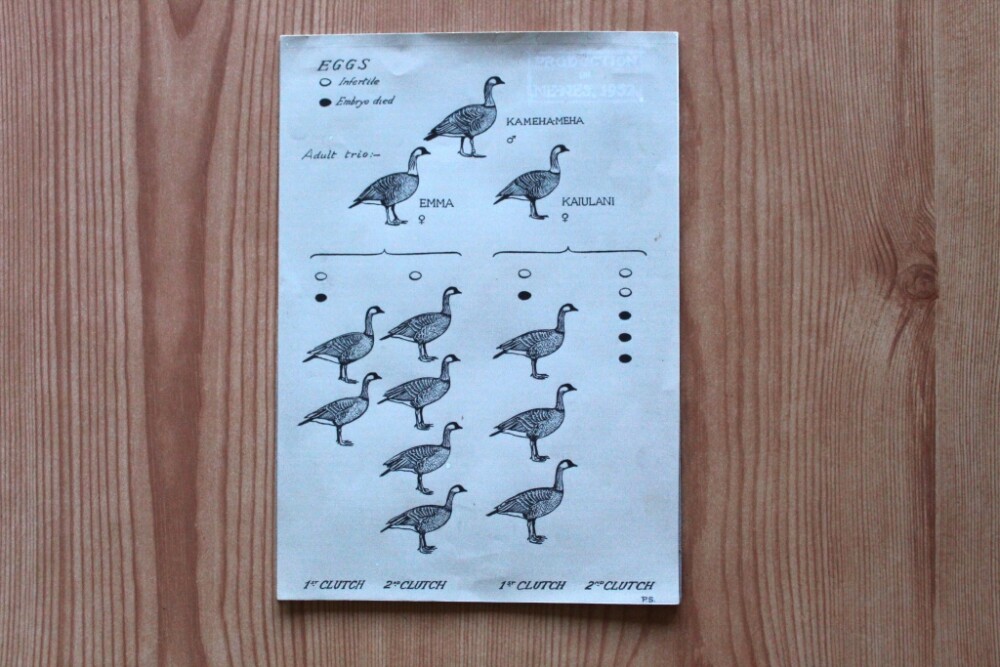
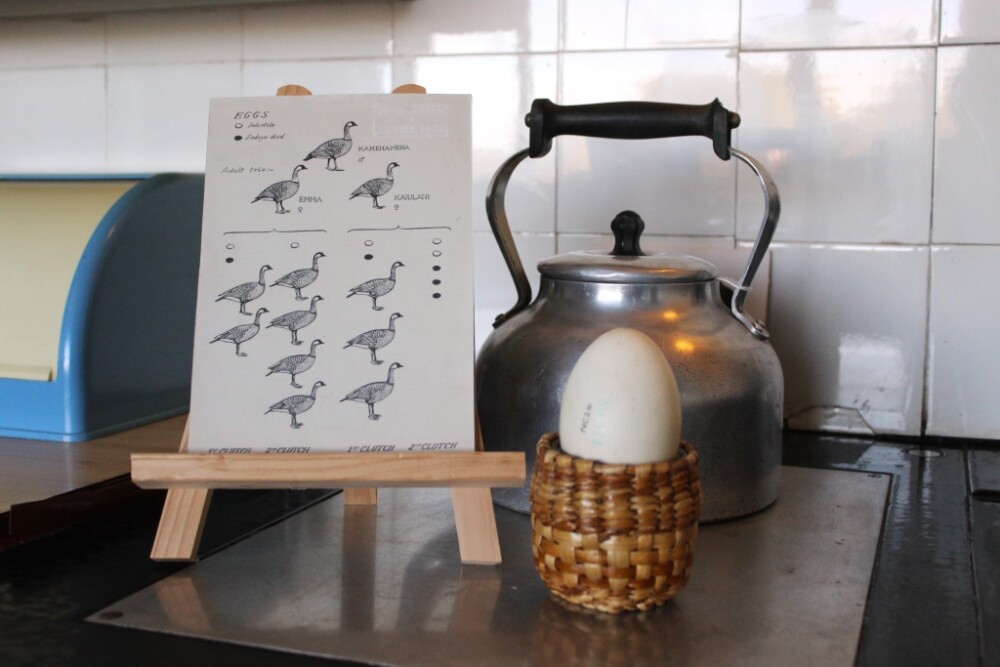
Scott was ever keen to document progress and in this charming drawing we can see the first three geese at Slimbridge, all named after Polynesian princes and princesses, with their immediate progeny. This programme laid the foundations for a series of spectacular successes in saving rare ducks and geese through captive breeding, most recently with our campaign to save the Madagascar Pochard from extinction. We continue to see breeding success in the Nene population in our Mission Possible habitat, with new goslings hatching in April 2026.
As our 80th anniversary approaches there has never been a better time to visit Slimbridge, encounter the current generation of Nene geese and visit Scott House to discover more fascinating stories about this visionary conservationist.