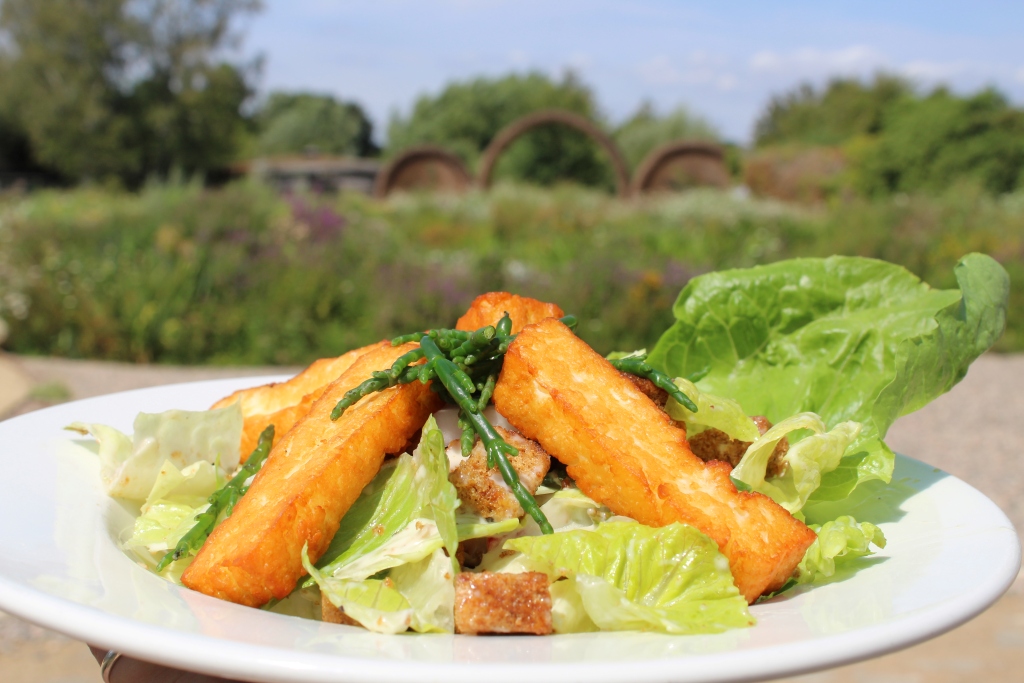
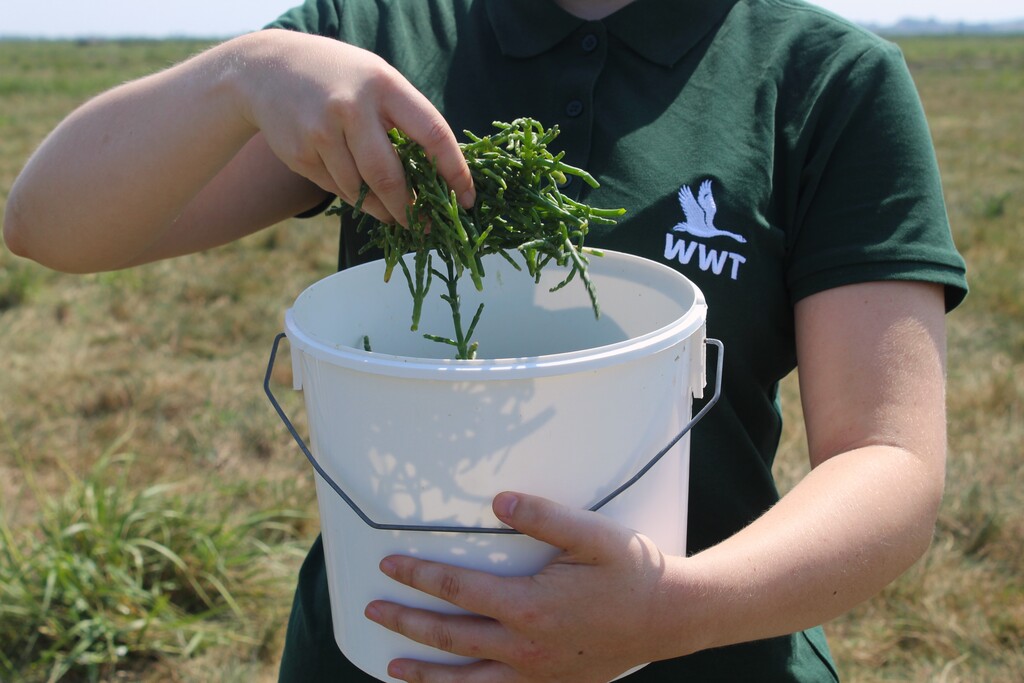
The WWT Slimbridge Catering Team were joined by some very curious cows recently while sustainably harvesting marsh samphire for the summer menu.
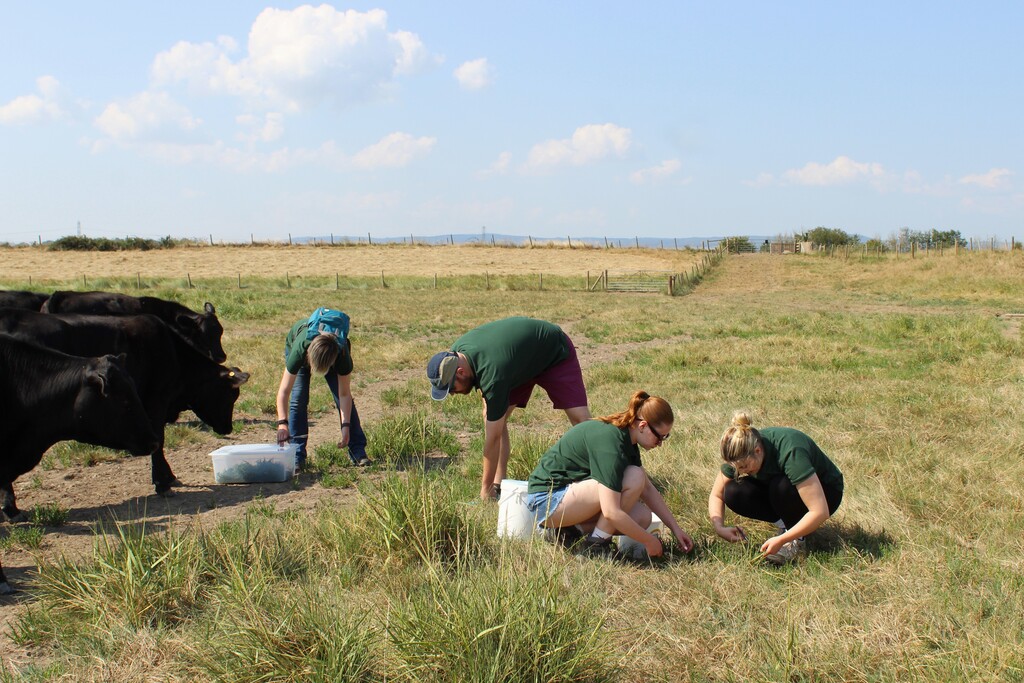
To get their hands on the very best of this delicious wild wetland plant, the team headed down the Severn Estuary to WWT Steart Marshes. Marsh samphire grows well here because the marshland lies low, meaning it gets a high number of tidal inundations. Work has been done on certain areas of the site to reduce the ground level even further, and by leaving these areas as open mud the samphire has been allowed to colonise in abundance. The lower the ground level the saltier the mud is, meaning that the samphire has less competition with other plants too.
Samphire is named after Saint Peter, the patron saint of fisherfolk, because the original plants with its name grow in coastal areas and are favoured by fishing communities. It isn't actually a single species, but a genus made up of a large number of very similar species that are difficult to tell apart. Even more confusingly, there is also at least one other species of edible plant also called samphire that is entirely unrelated. It's rich in sodium carbonate, so in the olden days, the plant's ashes were used for glassmaking to help melt sand into glass. This earned samphire its other name: glasswort.
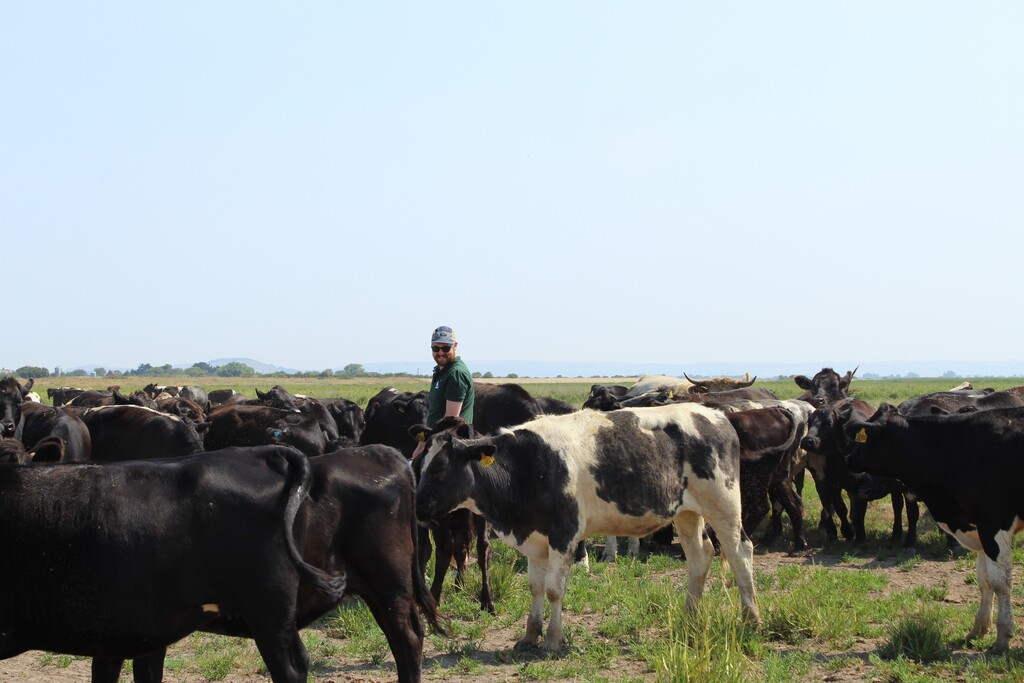
Marsh samphire flowers from August to September. It is a halophyte: a salt-tolerant succulent plant that survives harsh conditions by storing excess salt in structures called vacuoles in the cells of their stems, roots and leaves. It thrives on saltmarsh and beaches in the UK, sometimes forming carpets that look like miniature forests. Samphire's mat of roots helps to bind soft saltmarsh mud, providing anchorage for other plants to take hold and flourish. By colonising coastal areas, it also acts as a first line of defence against powerful storms and rising sea levels.
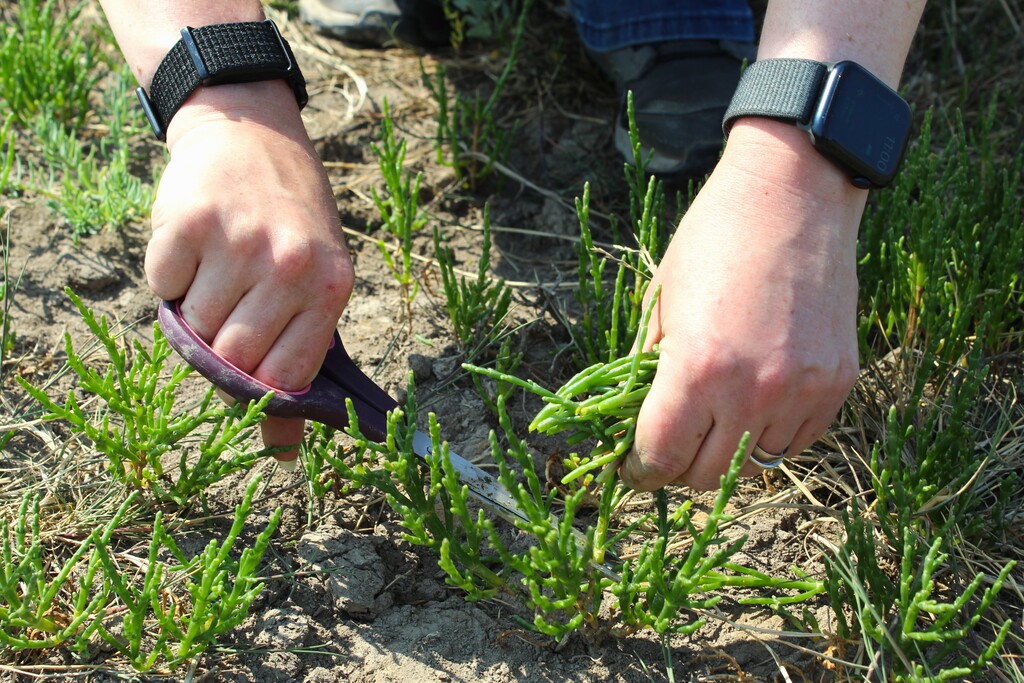
Marsh samphire has a lovely briny flavour, and is high in vitamin C and minerals too. After careful preparation it is now being served in the Kingfisher Café as part of the vegetarian Saltmarsh Caesar Salad with crispy halloumi, and as a side with our Fish and Chips.