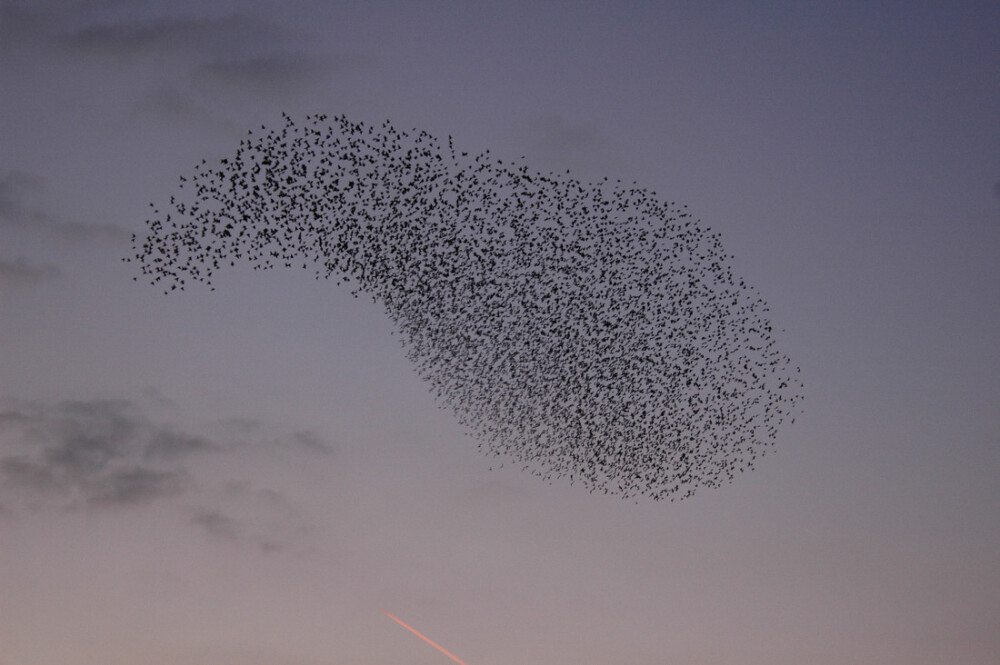
Witness tens of thousands of starlings dancing in the sky at WWT Martin Mere as the wetland centre stays open later for visitors to get the chance to see this amazing limited-time spectacle.
As the starlings swirl across the sky together, they create mesmerising patterns and an unforgettable sight which the centre describes as an “unmissable moment in nature”.
To give visitors the chance to experience this incredible display, the centre is keeping its Harrier Hide open later until it draws to a close. If you’re planning a visit, here’s what you need to know:
- Last entry: 3:30pm as usual so arrive by this time
- Late opening: Only the Harrier Hide will remain open later for visitors wishing to watch the starlings which begins at around 4:30pm and ends at around 5pm. All other areas of the reserve will close as normal at 4:30pm.
- Admission: Admission tickets or WWT membership applies.
Starling murmurations are one of the most awe-inspiring sights in the natural world, but they are also wonderfully unpredictable. The birds gather in huge numbers before dusk, creating ever-changing shapes and patterns in the sky.
It is believed that the murmurations offer each bird greater protection from predators, as the individual odds of getting picked out by a predator become much greater if you are surrounded by 20,000 others, than if you are on your own. Furthermore, the flocking behaviour is thought to make it harder for any predator to pick out and concentrate on catching a single bird.
However, scientists remain befuddled on how the thousands of birds move as one unit and don’t bump into each other. Studies have even included references to particle physics and one study found that each individual bird’s movement affected seven others around it, which is what makes the starlings look like a twisting, morphing cloud.
Murmurations are bigger in the autumn and winter as British starlings are joined by migrant birds escaping colder weather in Europe. However, starling numbers in general are in decline and many murmurations aren’t anywhere near as big as they were ten or twenty years ago. The decline is thought to be as a result of modern farming practices and insecticides reducing the starling’s food supply.
It is unknown how many days the starling murmuration will last for, so WWT Martin Mere is advising visitors wanting to see the spectacle to come over the next few days starting 30 November. The centre will update visitors via social media and the website once the closing times revert back to normal closing.
To find out more about WWT Martin Mere, visit the website.