For some species, particularly those adapted to relatively narrow climatic conditions, extreme heat can require careful management. But if you have visited our flamingos at one of the WWT centres they call home during the recent hot weather, you may have noticed that they seem remarkably unperturbed by it all.
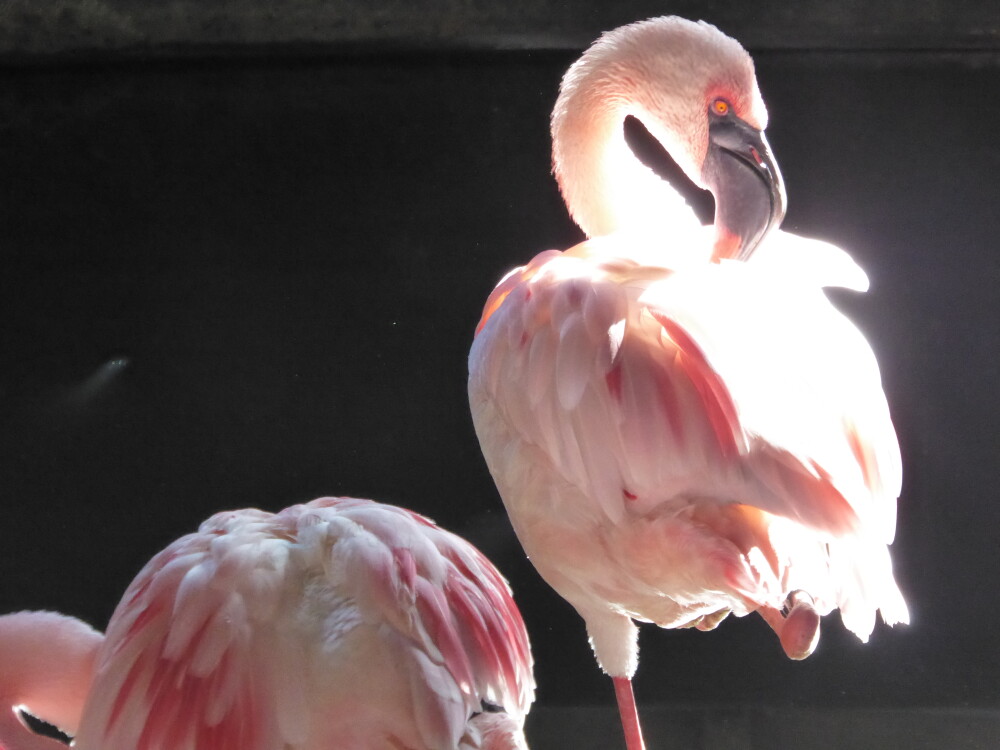
There is a very good reason for this. Flamingos are, in many respects, specialists in dealing with extremes. Biologically speaking, flamingos are the "extremophiles" of the bird world. They are organisms adapted to survive in extreme environmental conditions and wild flamingos regularly occupy some of the most inhospitable wetlands on Earth. Flamingo habitats can be hot, cold, windy, salty, alkaline and extremely exposed. Breeding colonies occur on vast open salt lakes where there is little or no vegetation and consequently virtually no shade. Temperatures can be intense during the day, while conditions can change dramatically overnight. Other flamingo populations live at high altitude, where birds experience intense solar radiation alongside low temperatures and biting winds. Some flamingos even experience being frozen into the water of the lake that they are roosting in! For a flamingo, therefore, challenging weather is very much part of being a flamingo.
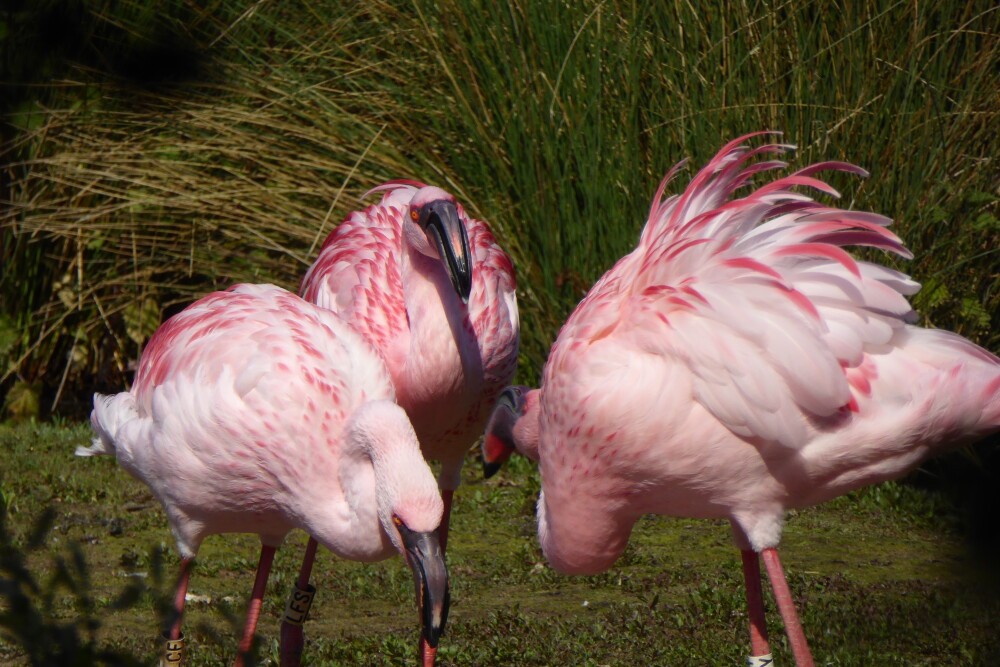
And the different flamingo species that we care for at WWT provide some wonderful examples of this environmental flexibility. The lesser flamingos at WWT Slimbridge are probably the birds for whom the current warm weather feels most familiar. In the wild, lesser flamingos are famously associated with the soda lakes of Africa's Rift Valley, including lakes in Kenya and Tanzania. These wetlands can be extraordinarily hot, exposed environments. Vast numbers of flamingos may gather on shallow, highly alkaline lakes under intense sunshine, with very little opportunity for conventional shade. Lesser flamingos have evolved to function in these demanding conditions, so a spell of British summer heat is well within the sort of environmental variation that their biology equips them to experience.
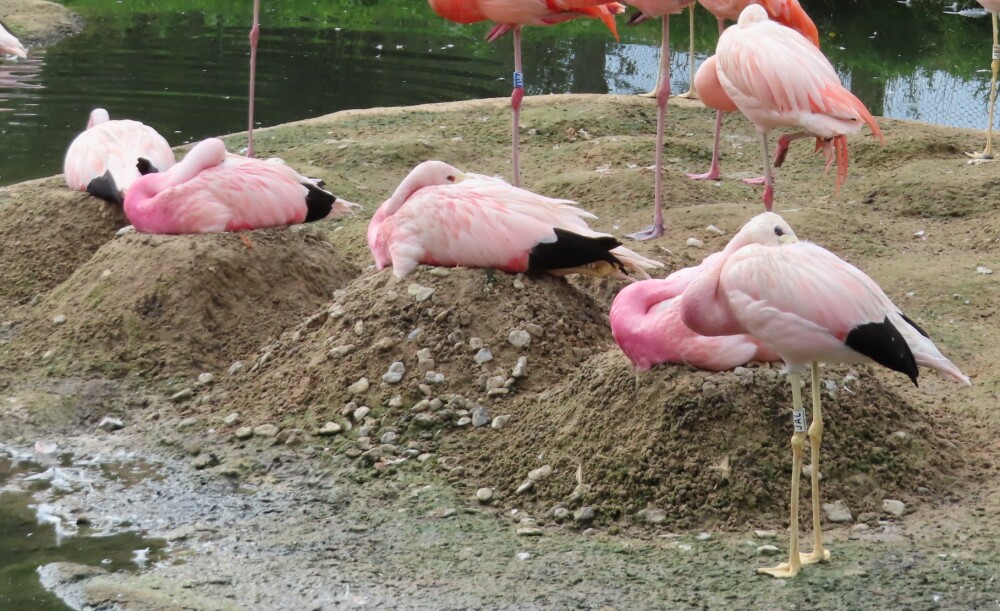
Indeed, this heatwave can positively impact flamingo behaviour, even for some of the older birds at WWT. The extra sunshine and rise in temperature can spur on nesting behaviour, as has been observed in the lesser flamingos at WWT Slimbridge.
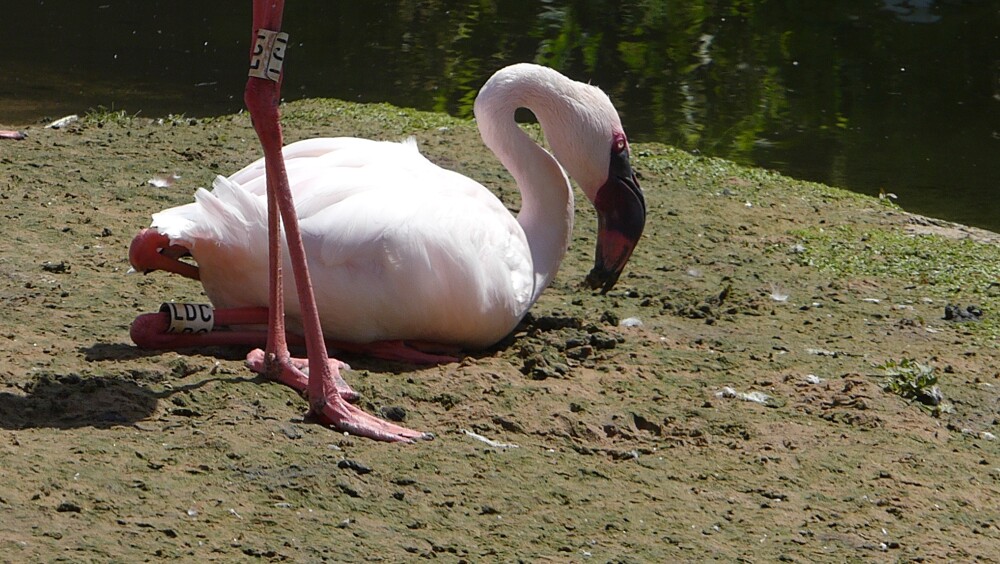
You can see a short video of this unusual behaviour (for the lesser flamingos) below.
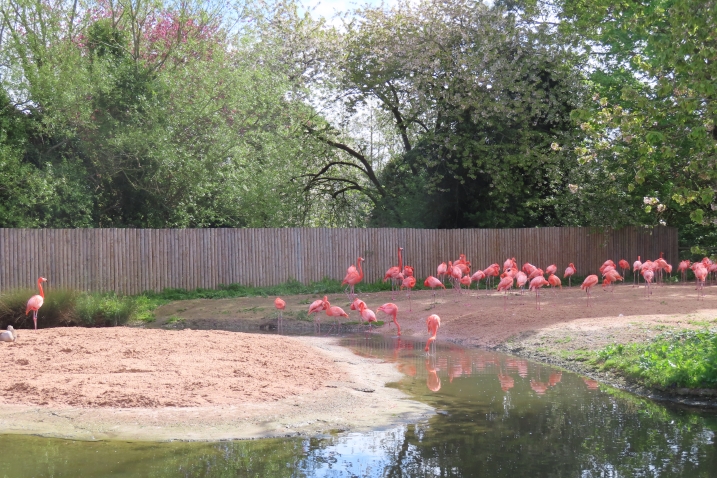
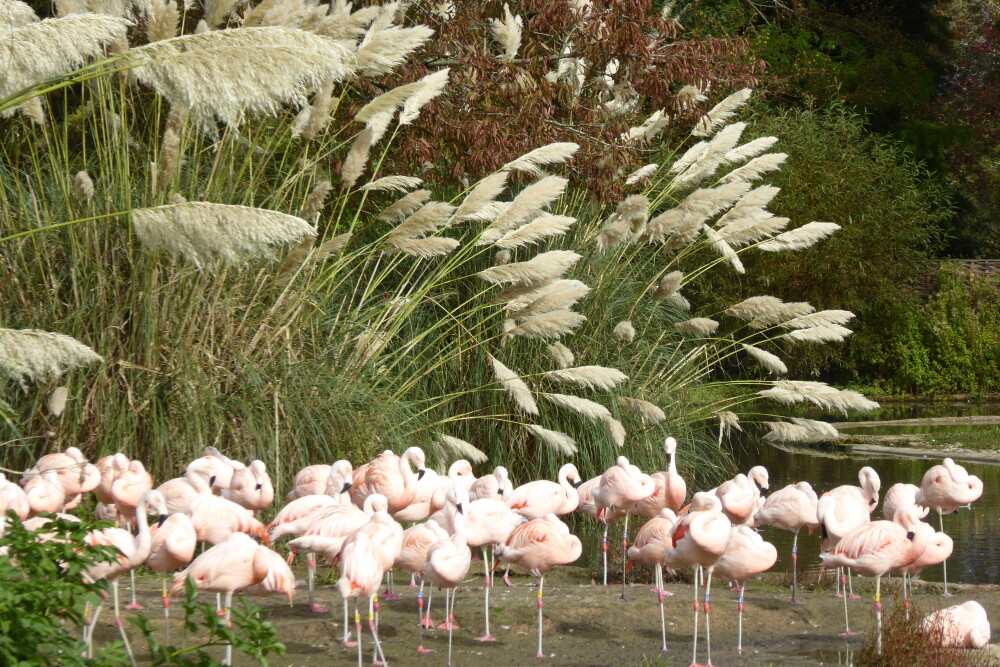
The Chilean flamingos that reside at WWT Martin Mere, WWT Slimbridge and WWT Washington tell a slightly different story. As their name suggests, they are found extensively in Chile, but their natural distribution extends across a substantial part of southern South America. This wide geographical range exposes different populations to a considerable variety of climatic conditions. Chilean flamingos can occur from lower-altitude wetlands to lakes associated with the Andean landscape, and across regions experiencing very different seasonal temperatures. Consequently, this is a species capable of functioning under a broad range of environmental conditions. Rather than being a bird adapted simply to "hot" or "cold", the Chilean flamingo is a particularly nice example of climatic flexibility that characterises some species of flamingo.
And then we have the super special Andean flamingos at WWT Slimbridge. We might intuitively assume that a flamingo associated with the high Andes would be poorly suited to a UK heatwave. Yet this is another example of why we need to think about an animal's complete ecology rather than simply labelling it as a "cold-climate species". Andean flamingos inhabit wetlands thousands of metres above sea level. These landscapes can be extremely cold, particularly at night, but they are also remarkably exposed. The bird experience intense solar radiation, little shade, strong winds and considerable variation in temperature. The birds therefore need to be able to respond to environmental conditions that can change dramatically. So even our more cold-adapted flamingos are not birds that have evolved within a narrow, stable temperature range. They are inhabitants of open and highly variable landscapes.
Of course, being able to tolerate environmental extremes does not mean that husbandry stops mattering when the temperature rises. Quite the opposite. Good animal care means providing the resources and opportunities that allow animals to respond to changing conditions themselves. And this is where the environments provided for our flamingos are so important.
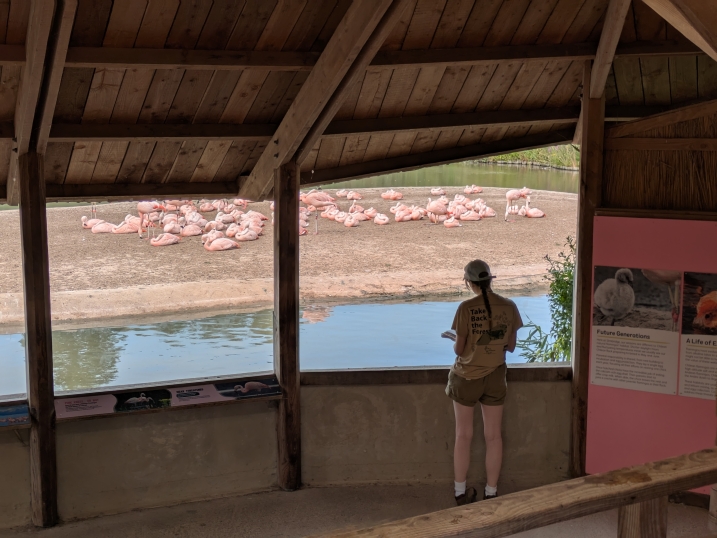
The birds have continual access to fresh drinking water, opportunities to bathe and stand in water, and the ability to move around their enclosures according to their own preferences. Shelter and shaded areas are available should birds wish to use them, while the animal care teams monitor the flocks closely and can respond if an individual bird shows any sign of finding the conditions challenging. Particular attention is paid to some of our more elderly birds in the Andean and lesser flamingo enclosure at WWT Slimbridge. Just like our older relatives in human families, geriatric animals can be less able to cope with extremes of temperature, so keeping a closer eye on these individuals and ensuring that they can remain cool and comfortable is especially important during very hot weather.
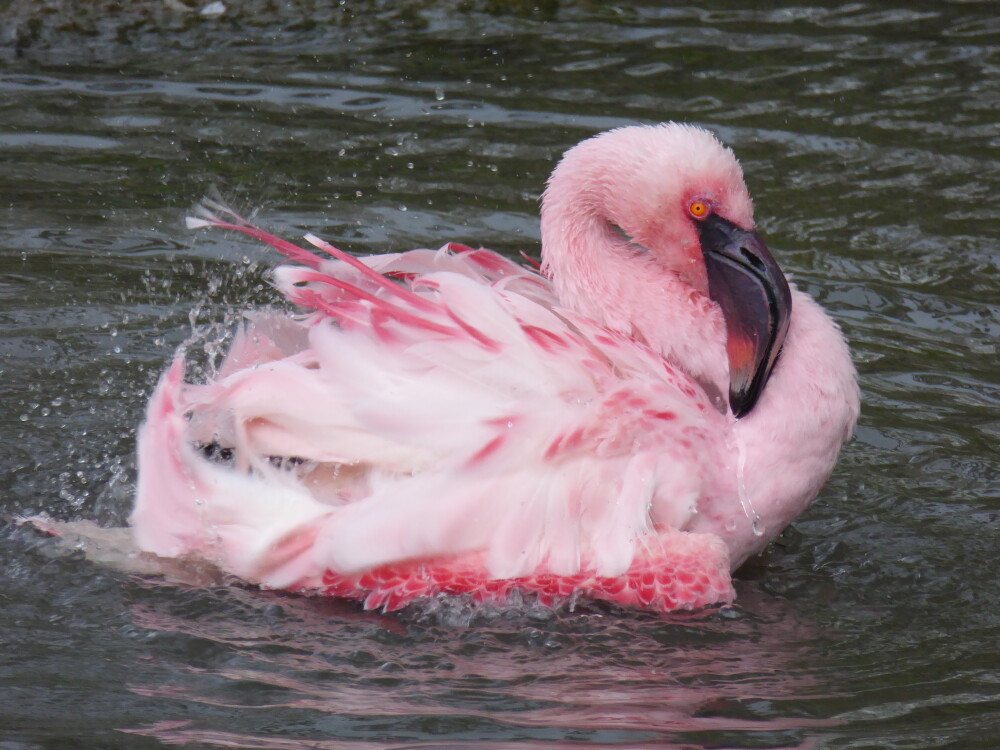
Water is particularly important. Anyone who has watched flamingos for any length of time will know just how closely their lives are connected to it. As well as providing opportunities for feeding, bathing and other natural behaviours, access to water gives the birds another way of responding behaviourally to warm conditions.
This combination of natural biological adaptations and appropriate husbandry means that our flamingos are extremely well placed to cope with periods of hot weather. It also highlights an important principle of modern zoo animal welfare. Good welfare is not necessarily about maintaining an animal within one constant set of environmental conditions. Animals have evolved in environments that change. Temperature, rainfall, wind, sunlight and food availability all fluctuate, sometimes considerably. What matters is understanding the biology of the species and providing animals with the resources they need to respond appropriately.
For flamingos, environmental variation is a normal part of life. Like other birds, flamingos can alter their behaviour and posture in response to environmental conditions. They can move between different areas, change their activity and make use of water, shade or shelter where available. Watching what the birds choose to do therefore gives their keepers useful information about how comfortable they are.
This is why careful behavioural observation remains such an important part of animal care. We should never simply assume that an animal is comfortable because we know that its species can tolerate high temperatures. Keepers know their birds and can spot changes in activity, feeding, resting or other behaviours that might indicate that an individual is finding conditions challenging.
Luckily, flamingos start with an impressive set of adaptations to the heat. When we see them standing outside during weather that feels exceptionally hot to us, it is worth remembering that we are judging the conditions from a very human (and perhaps very British) perspective. The same temperature may have quite a different significance to an animal whose ancestors evolved on exposed salt lakes, soda lakes and high-altitude wetlands.
For the lesser flamingos, the sunshine might provide a small taste of the African Rift Valley. For the Chilean flamingos, changing temperatures are characteristic of a species with an impressively broad geographical range. And for the fantastic Andean flamingos, coping with exposure and climatic variability is simply part of the challenge of being a high-altitude specialist. That doesn't mean flamingos are invincible. No animal has unlimited tolerance of environmental extremes, and so our good husbandry, access to fresh water, shade and shelter remain essential. But flamingos are extraordinarily resilient inhabitants of some of the world's most demanding wetlands.
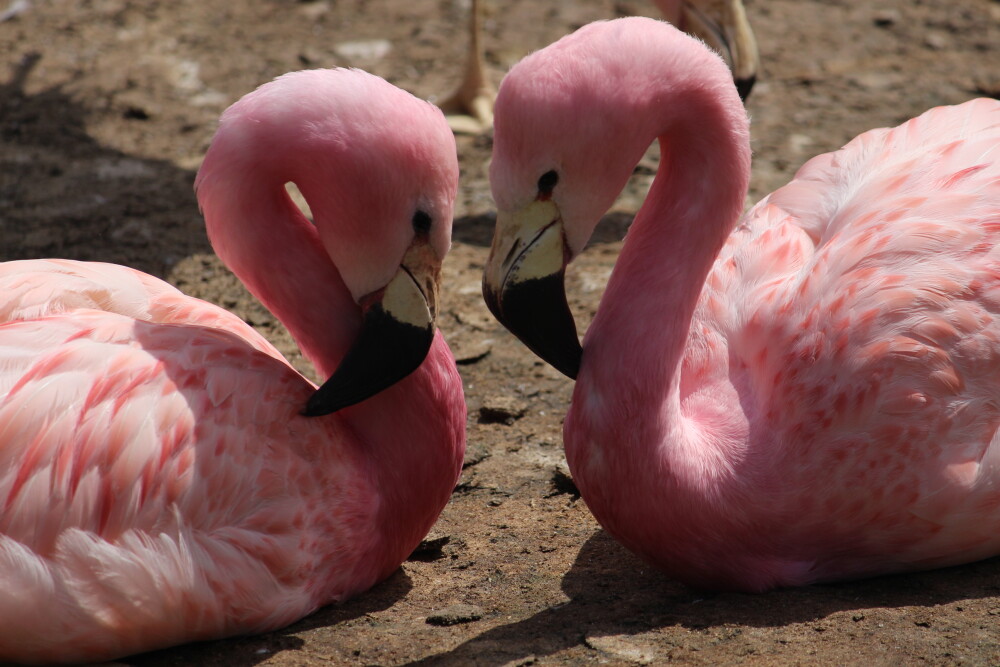
So, while we might be searching for the nearest fan, our flamingos have rather different options available: a drink, a bathe, somewhere sheltered if they want it, attentive keepers watching over them, and millions of years of evolution equipping them for life in an unpredictable environment. Perhaps this extraordinary British heatwave isn't quite so daunting when you're a flamingo...?