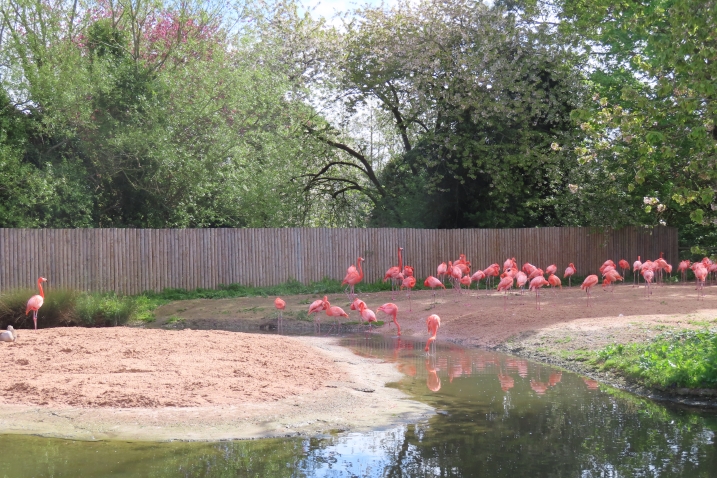
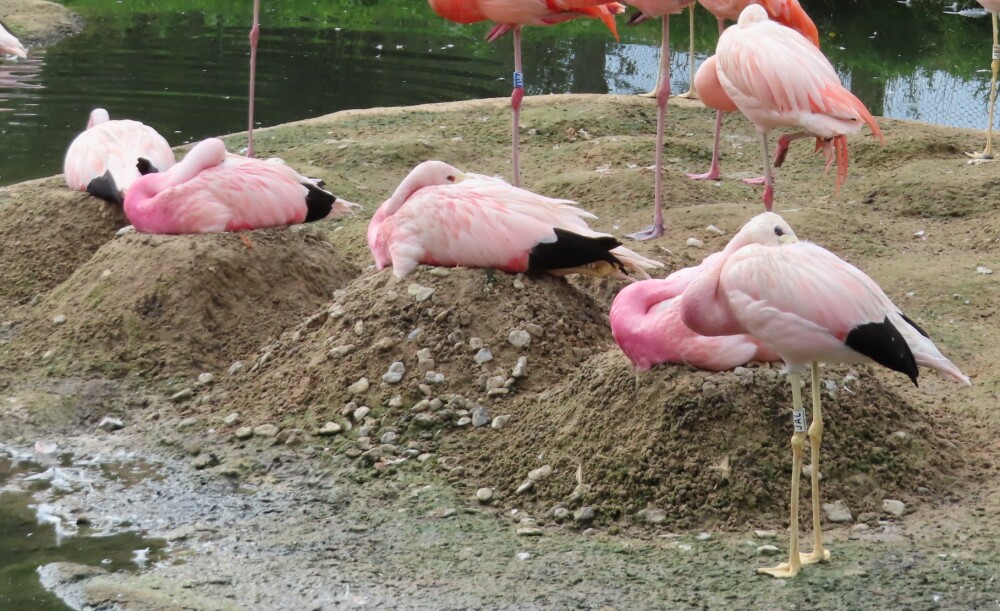
Flamingo nests are superb structures. The birds scrape wet mud with their bills and gradually form little pellets to stick together and build into a mound, creating a raised platform with a shallow depression on top for an egg. This shape has evolved to protect eggs and chicks from intense heat and from flooding. And when flamingos become enthusiastic about nest building, they can become very enthusiastic! Some of the mounds currently being constructed by the WWT Slimbridge Andean flamingos are impressively large!
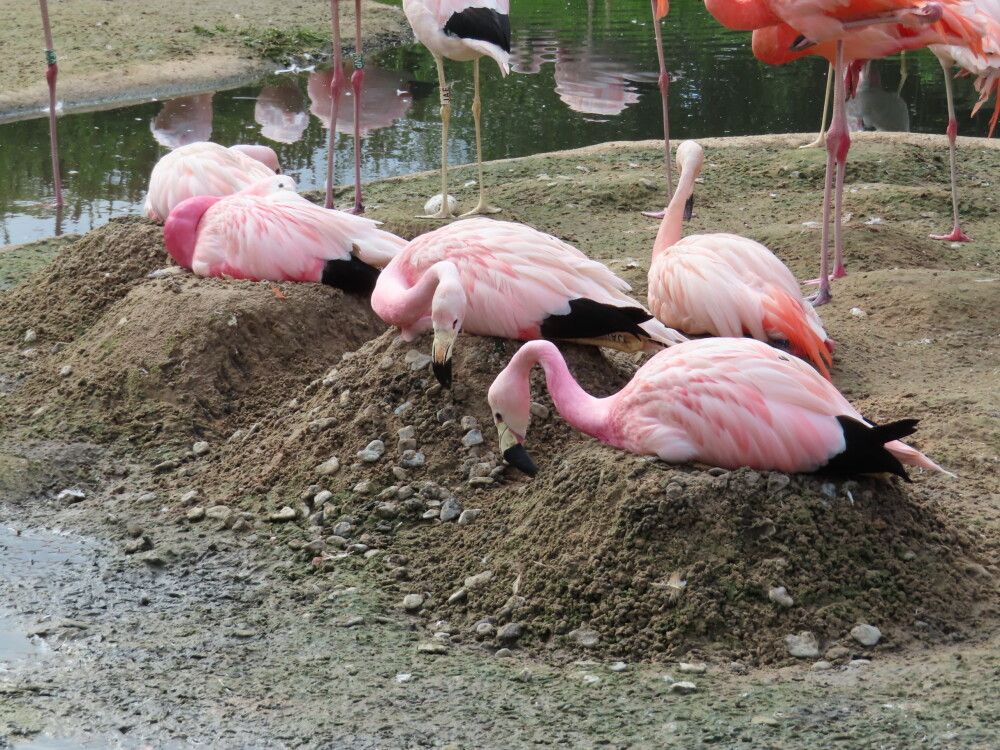
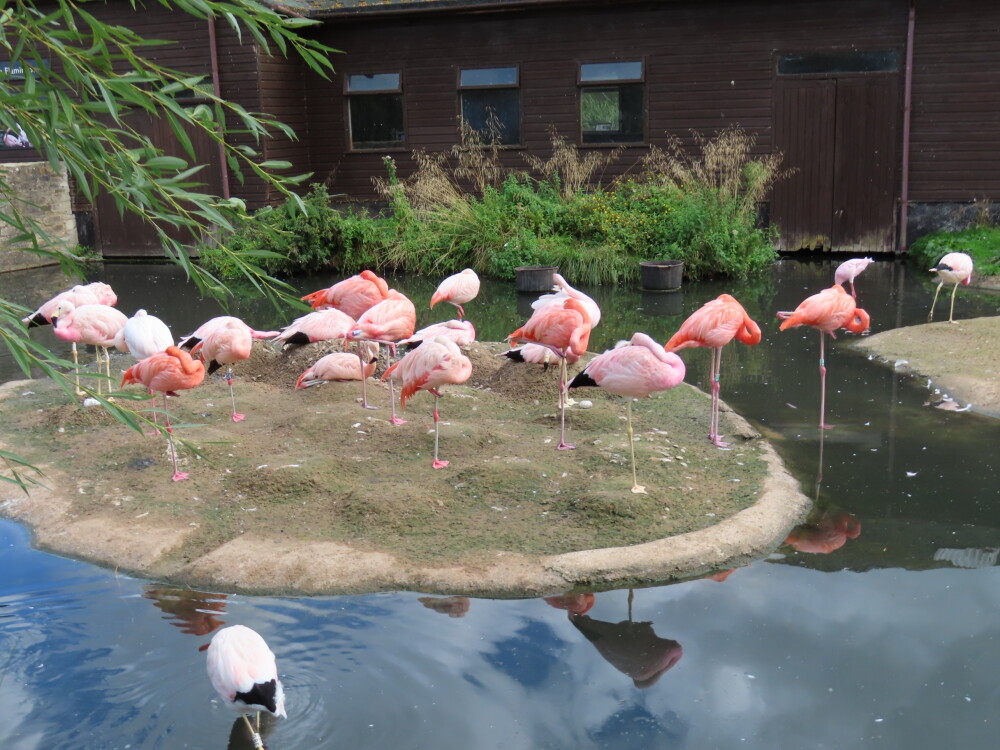
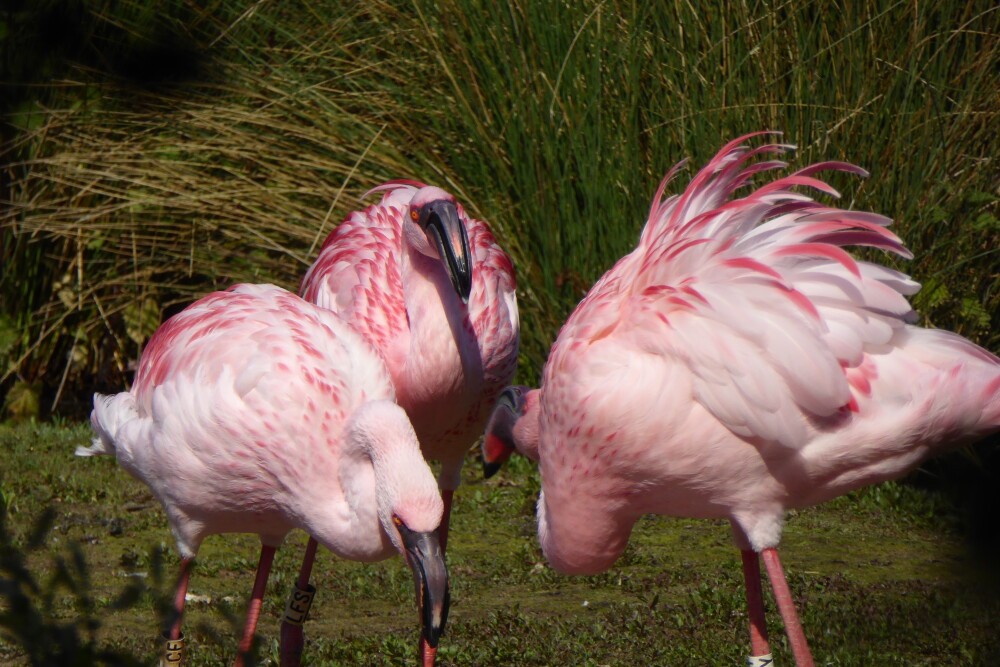
Getting all your nests in a line. Andean flamingos nest building on the island in their enclosure. Keen observers can look out for bonded pairs who are engaged in this nesting activity. The middle bird is JAU, who is most often seen with female JAY. A real "married couple" (and yes, male flamingos take an equal role in breeding responsibilities!).
What makes this activity particularly wonderful to see is the age of the birds doing the building.
Pretty much all of the Andean flamingos at WWT Slimbridge are in their mid-60s, and some may be older still. Yet despite their advanced years, these birds are pairing up, defending nest sites, shifting mud around and constructing nest mounds. Some female birds have even laid eggs.
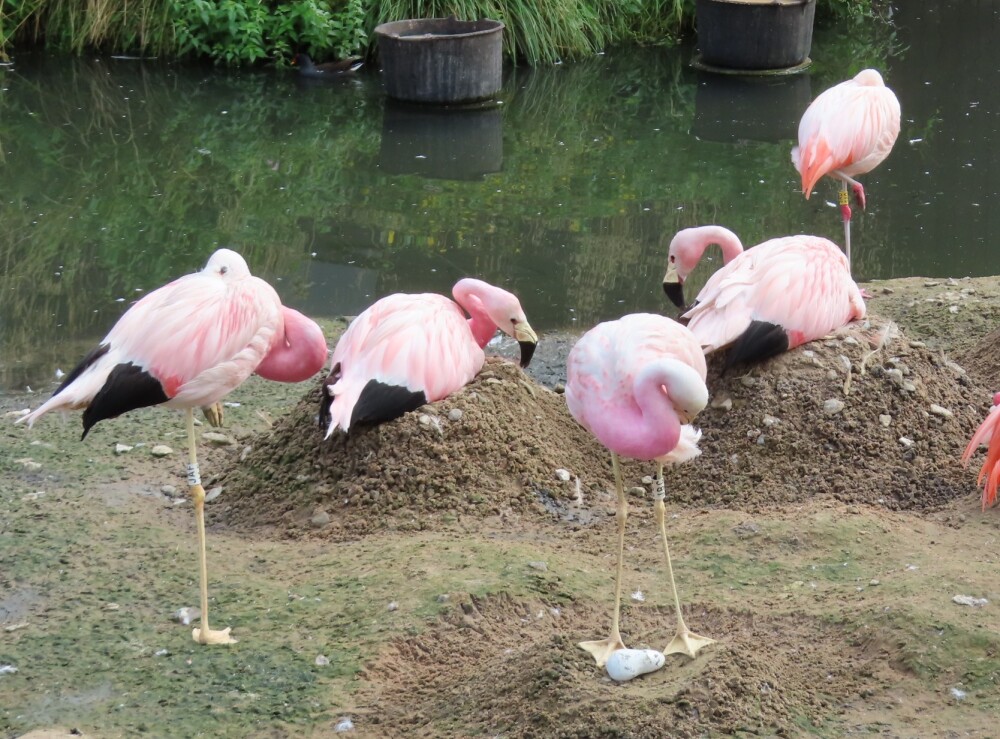
Spot the egg (sort of). Actually a pebble as the real egg is removed to see if it may be fertile and placed it the safety of an incubator. This female is JBC - of the oldest in the group and partnered with a very tall male, JAK.
We don't expect these eggs to be fertile. Reproductive fertility is likely to decline as flamingos age, and successful mating may also become more difficult for elderly birds. But producing a chick is not the only interesting part of what is happening here.
The important thing is that these birds still appear highly motivated to behave like breeding flamingos.
But why now? At the tail-end of summer, start of autumn? The recent weather may have something to do with it.
We've experienced several periods of very hot weather this summer, interspersed with some spectacularly heavy downpours. To us, the heatwave might be uncomfortable and irksome. To a flamingo, the heat followed by a rainy deluge provides some very interesting environmental information.
In the wild, rainfall can transform flamingo habitats. Water levels change, previously dry areas become flooded and wet mud becomes available for nest construction. For birds whose breeding opportunities can depend upon suitable environmental conditions appearing at the right time, these changes can provide powerful cues for reproductive behaviour.
The combination of recent heat and rain showers over WWT Slimbridge may thave provided just the right spark to encourage the Andean flamingos to start nesting.
And this is where watching a flock of elderly flamingos building enormous piles of mud becomes more than simply an interesting behaviour to spot during your visit. It tells us something important about caring for older animals.
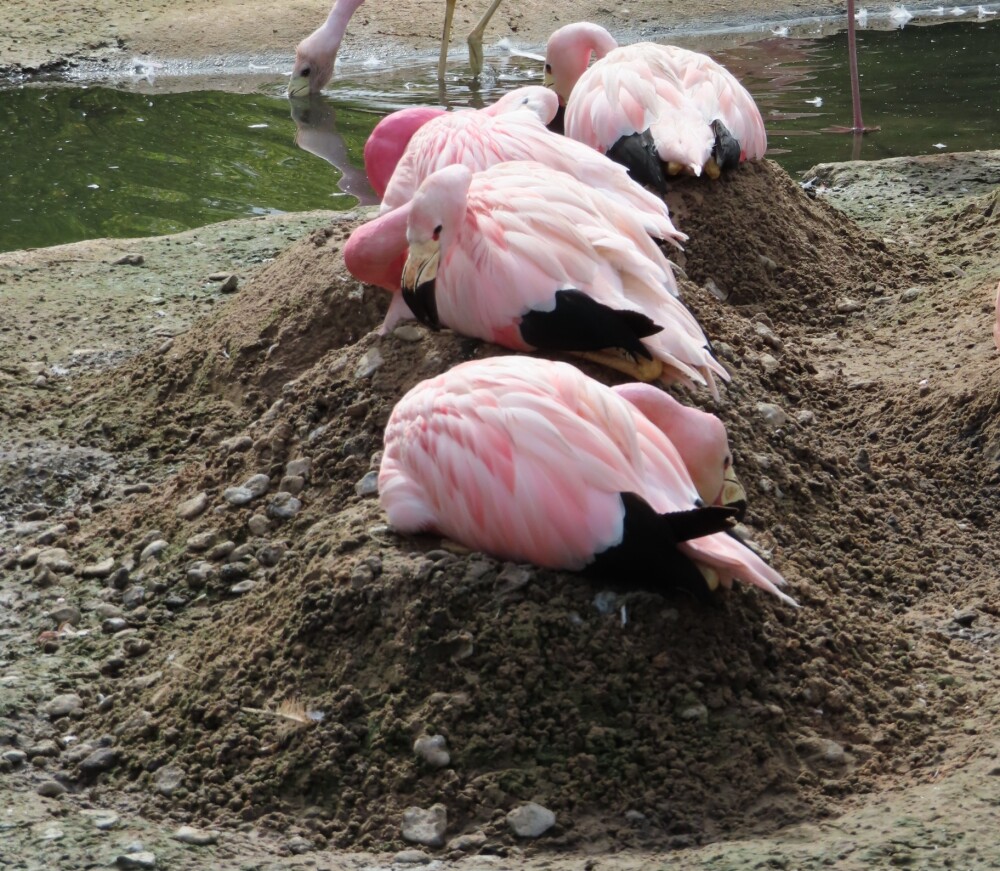
Pretty impressive nest mounds hey! Who says that pensioners cannot have fun?!
As animals age, it can be tempting to think mainly about making their lives easier. Comfortable resting places, appropriate nutrition, veterinary care and easy access to important resources are all essential for geriatric animals. But good care should not mean removing every challenge or assuming that older animals no longer need opportunities to perform the behaviours that have been important throughout their lives.
An elderly flamingo is still a flamingo.
If an animal remains motivated to court a partner, build a nest, defend a nesting spot or investigate the activities of its neighbours, then providing an environment in which it can make those choices is an important part of good welfare. The outcome doesn't necessarily have to be a fertile egg or a successfully reared chick for the behaviour itself to have value.
The WWT Slimbridge Andean flamingos demonstrate this beautifully. These are very old birds, but given the right environmental conditions, suitable nesting material and the freedom to choose what they do with it, they are showing us just how much behavioural motivation remains.
There is also something rather fantastic about seeing birds of this age investing so much effort in constructing a nest. They scrape, mould and pile up the mud, sometimes producing surprisingly substantial structures. They interact with their partners and nest site neighbours and become thoroughly involved in the social interactions of a nesting colony. It is a reminder that ageing does not erase an animal's behavioural biology.
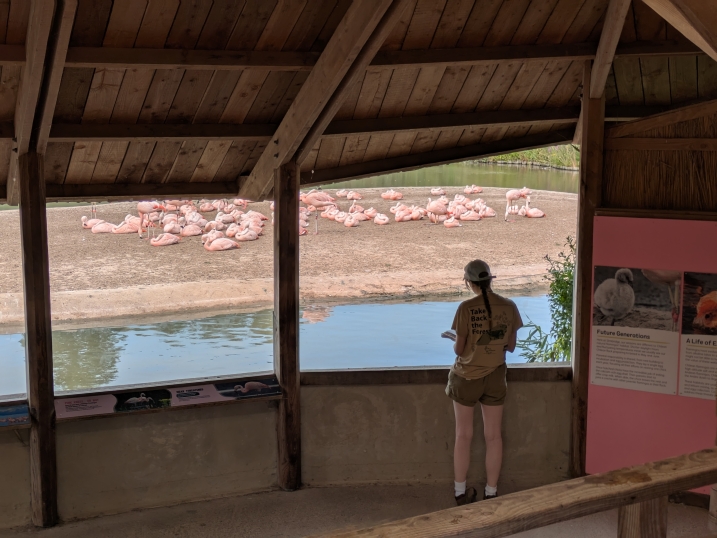
If you are visiting WWT Slimbridge soon, take a little extra time at the Andean flamingo's enclosure and see whether you can spot the nest builders at work. Look for birds sitting on or standing beside mud mounds, pairs spending time around particular nest sites, and individuals carefully adding more material to their constructions. You'll need to be quick, though. Flamingo nesting behaviour can be rather fleeting, and the current enthusiasm may not last for long, especially as autumn - with its less favourable weather - marches on.
But while the nesting remains, it is a fantastic opportunity to watch some of WWT Slimbridge's oldest residents demonstrating behaviours that flamingos have performed for millions of years.
They may be over 60 years of age, but nobody has told these super special flamingos that they're too old to build a nest.