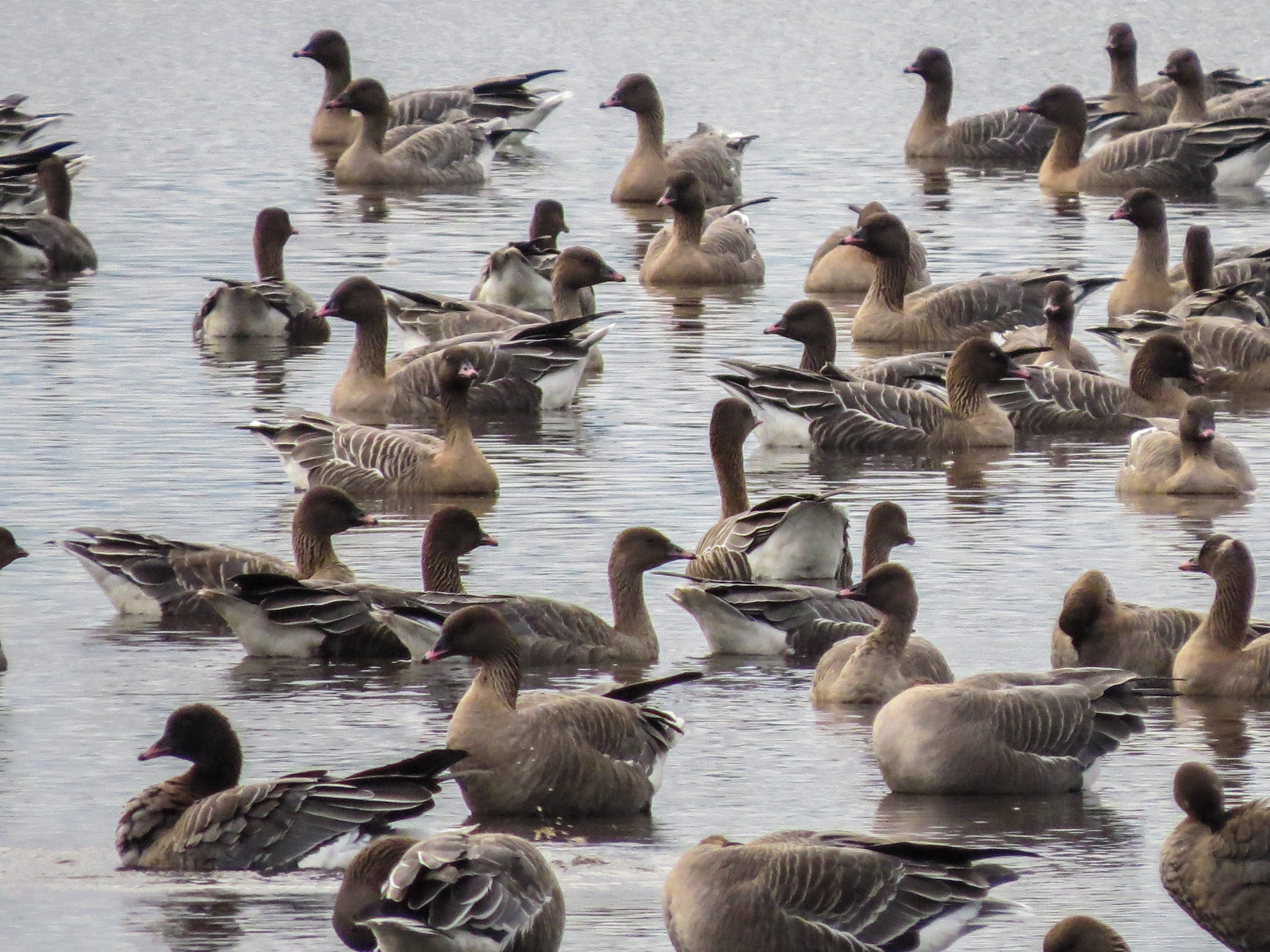
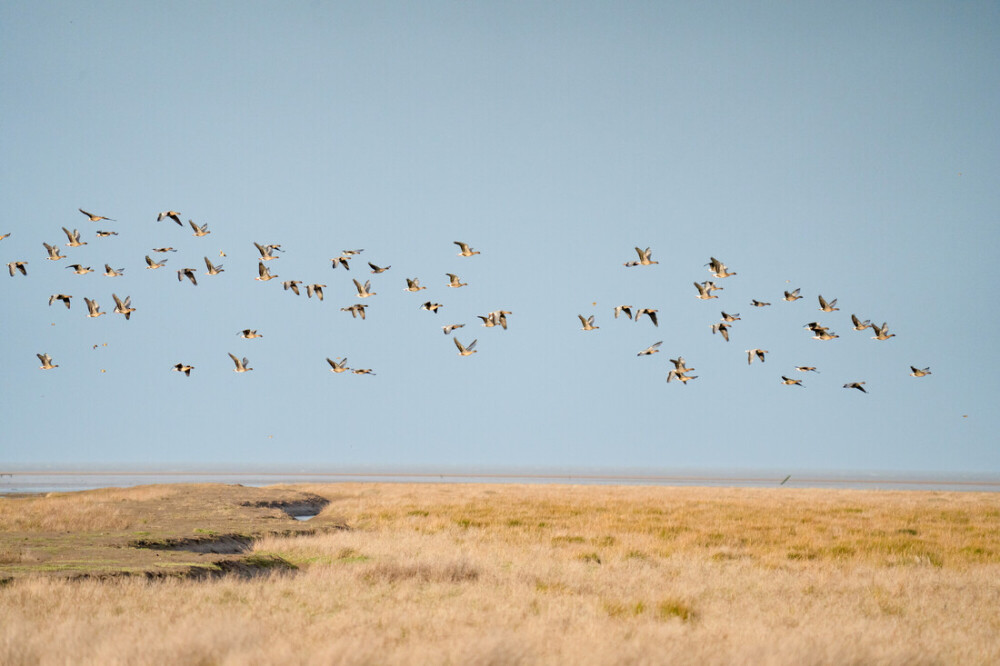
Each autumn, the skies above WWT Martin Mere come alive as tens of thousands of pink-footed geese arrive at the reserve, filling the sky with their distinctive calls as they descend onto the mere to spend the night.
For many visitors, seeing thousands of geese gathering together is an unforgettable sight. But these birds have already travelled an extraordinary distance before reaching Lancashire. So, where do they come from, and what brings them here every autumn?
From Iceland to Lancashire
The majority of the birds that arrive at Martin Mere have travelled from Iceland and eastern Greenland, where they spend the short Arctic summer breeding and raising their young.
During the summer months, the geese take advantage of the long daylight hours and abundant food available. But as autumn approaches and temperatures begin to fall, the days become shorter and food becomes harder to find.
The changes in daylight, temperature, and food supply signals the beginning of their remarkable migration south.
An incredible journey
The journey from Iceland to Britain is a demanding one. The geese must cross the North Atlantic and there can be many barriers that make their journey challenging, from extreme weather conditions to possible collisions with onshore and offshore wind farms.
For the birds, migration is more than simply travelling from one place to another. They need to reach areas where they can find enough food and safe places to rest before continuing their journey.
The geese can travel over 800 miles to reach their destination. By plane alone, which is around 500 miles per hour, it would take us approximately three hours to travel from the UK to Iceland, and pink-footed geese fly at average speeds of approximately 30 miles per hour so its easy to see just how long and exhausting their travel can be.
During their first leg, the geese will fly for around 6 hours from Iceland and land on the Faroe Islands. They will stop over to rest and wait for favourable weather conditions. They will then take off again and settle on sites within the UK. In total, their journey to the UK can take around two to three days.
One of the most important stopping points is WWT Martin Mere in Lancashire, where as many as 40,000 pink-footed geese may gather at once. The reserve provides a safe roosting site on the mere, while surrounding fields offer feeding grounds.
Why do they choose Martin Mere?
WWT Martin Mere has everything that a migrating goose might need. Open water for safety, areas for resting overnight, and nearby farmland where the birds can feed.
The geese arrive throughout the day in large skeins, settling on the mere for their well deserved break.
For the groups already with Martin Mere, they will often return to the mere at dusk. Thousands can return together, creating an incredible spectacle as they twist and turn through the sky before landing on the water.
At dawn, the spectacle happens all over again. The geese leave the mere in large skeins, heading out across the surrounding countryside to feed during the day.
The geese may only stay a few days each before they continue their journey down south.
A vital stop on the migration route
Martin Mere is not simply a place where the geese happen to gather. It forms an important part of their annual migration journey.
After arriving in Britain, many pink-footed geese continue south, following traditional migration routes and moving between wetlands, estuaries, marshes and farmland.
These journeys are connected to the availability of food and suitable habitat. The same birds may return to familiar places year after year, following routes that have been used by generations.
A spectacular sign of autumn
For wildlife watchers, the arrival of the pink-footed geese is one of the clearest and most anticipated signs that autumn has arrived.
Their calls can often be heard before the birds are seen, echoing across the reserve as flocks gather overhead. Then, suddenly, the sky can fill with hundreds or even thousands of geese travelling together.
Celebrating their annual arrival, WWT Martin Mere is hosting its first ever Goosefest, with a line-up of events and activities from 5 September until 18 October.
Visitors can expect workshops on how to count geese, guided walks, late night openings, and the annual North West Bird Watching Festival with guest speakers, exhibitors, and a full weekend of activities sponsored by Sony.