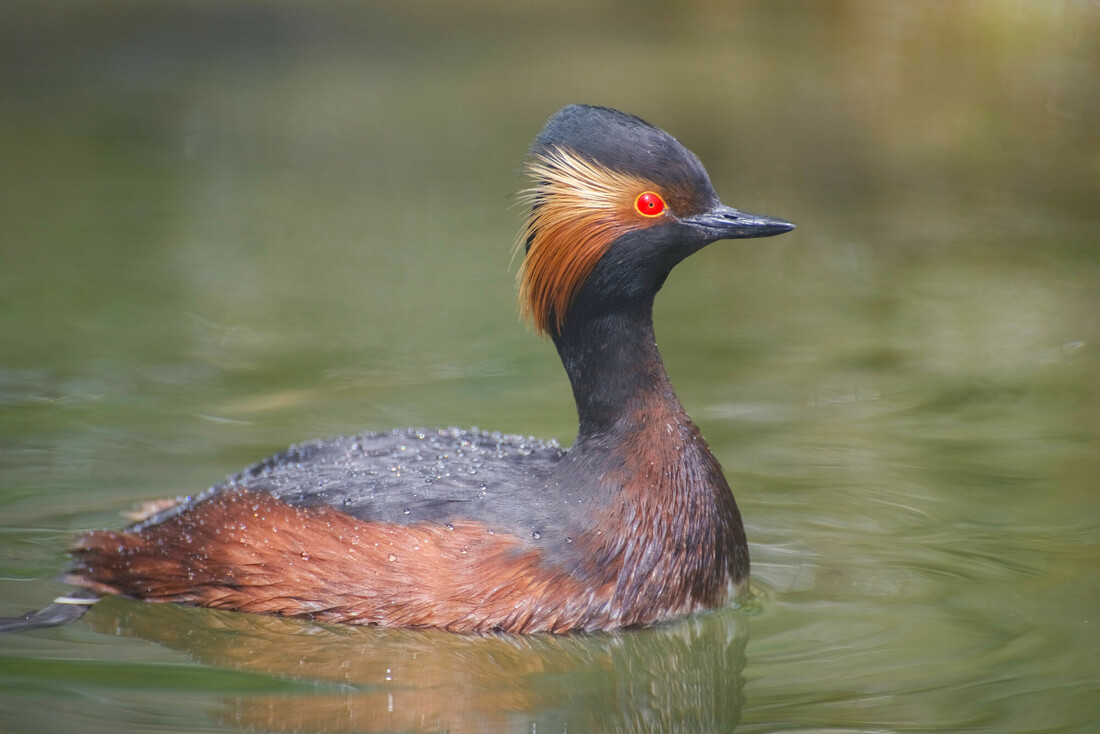
Earlier this year, we opened the Soundscape Aviary inside the Waterscapes Aviary. The vocal new residents include a pair of black-necked grebes, so this month we wanted to give them a proper introduction. Cover image by Jonathan Beilby.
The black-necked grebe (Podiceps nigricollis) is of least concern on the global IUCN Red List of Threatened Species, but is classed as vulnerable on the European list. Their UK conservation status is amber, as they are rare breeders in this country and are uncommon in winter. In 2025, there were just 55 breeding pairs and a maximum of 115 individuals in the UK, where they have bred only since 1904. There have been a small handful of wild black-necked grebes to visit WWT Slimbridge over the years, including a juvenile on South Lake in June 2021.
So-called because they are the only grebes with a black neck even in breeding plumage, they are similar in appearance to the Slavonian grebe but can be distinguished by their golden 'ears' in comparison to the Slavonian grebe's golden 'horns'. Thanks to this spray of golden feathers that both males and females grow from behind their eyes during the breeding season, they are also sometimes called an 'eared grebe'. In winter their plumage turns to black and white, with the black-necked grebe having more black on its head in winter than the Slavonian grebe. If you look closely, you may also notice that the black-necked grebe has an uptilted bill.
Quick-fire facts:
- Their piercing red eyes are likely attributable to a combination of pigment, structure, and enlarged blood vessels. Other diving birds have red eyes too, so it's hypothesised that the colouration may aid underwater vision.
- During the courtship season, they make an advertising call that starts with a single note and ends with a hiccup. The female’s call is higher pitched and slightly shorter than the male's. At colonies where multiple birds are calling, the din could be described as sounding like a chorus of frogs!
- They are the most abundant grebes in the world with a population of around 5 million birds, compared to the great crested grebe's population of only around 1.5 million.
- They are more sociable than other grebes, often nesting in colonies amongst gulls for protection.
- Their legs are set quite far back along the body, meaning they cannot walk very well. They therefore build their floating cup-shaped nests at the water's edge.
- They feed mainly on insects, catching them on the water's surface or foraging for them through foliage. They also dive for crustaceans, molluscs, tadpoles and even small frogs and fish.
- Their eggs hatch after a 21-day incubation period, and they immediately desert the nest. The parents then split the chicks up between themselves, rearing them to become independent in about ten days. Even though the chicks can swim and dive after leaving the nest, they prefer to stay on their parents' backs for four days after hatching.
- They generally avoid flight, but travel as far as 3,700 miles during migration!
- After breeding, many migrate to saline lakes to moult where they feed on brine shrimp for energy before their winter migration.
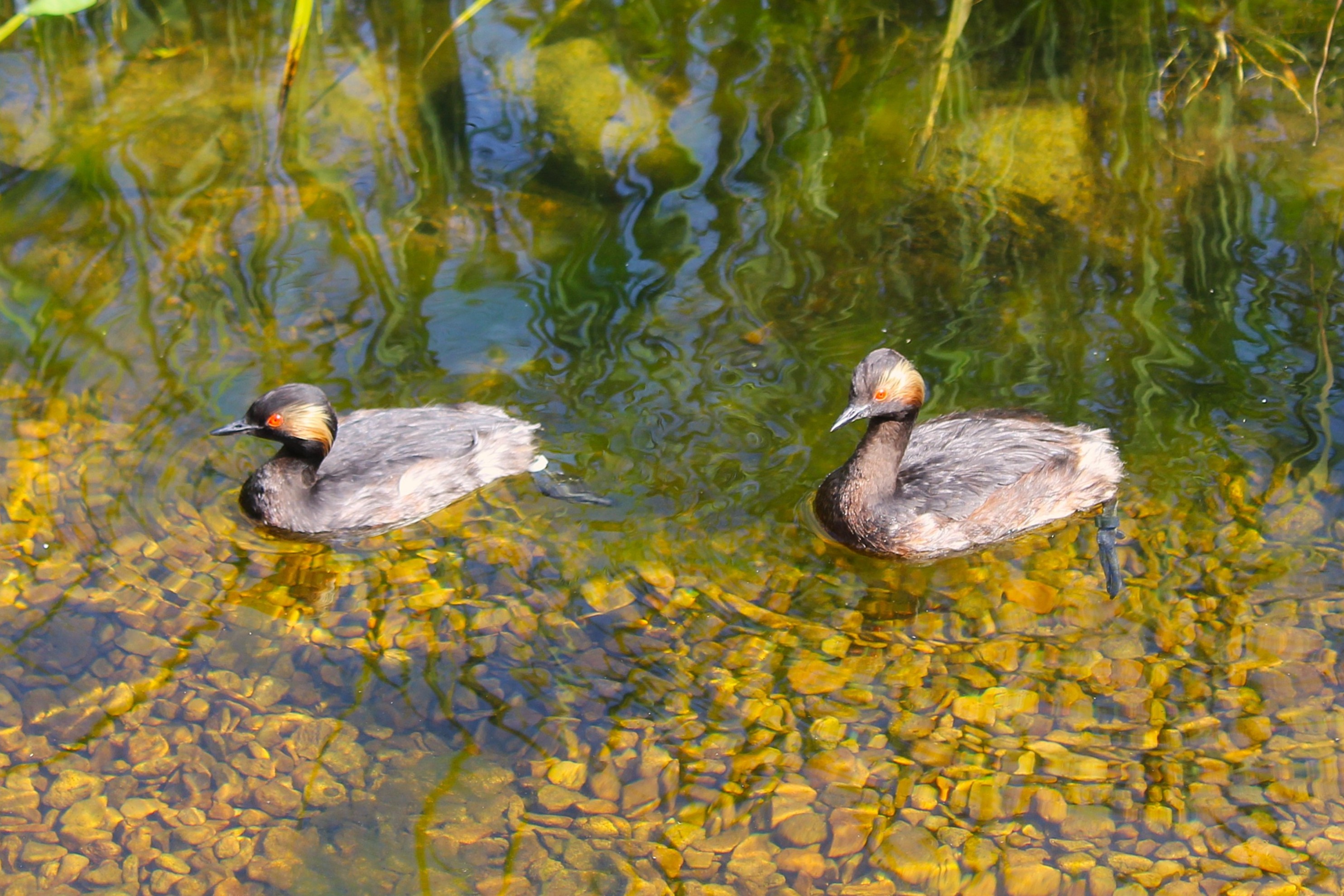
Check back next month for another feathered feature!
Is there a specific bird on site that you'd like to learn more about? Nominate them as our next 'bird of the month' by sending us a message on social media.