Each month, we'll be taking a deep dive into the world of one of the birds you might find at WWT Slimbridge — either in our Living Collection, or on the Reserve.
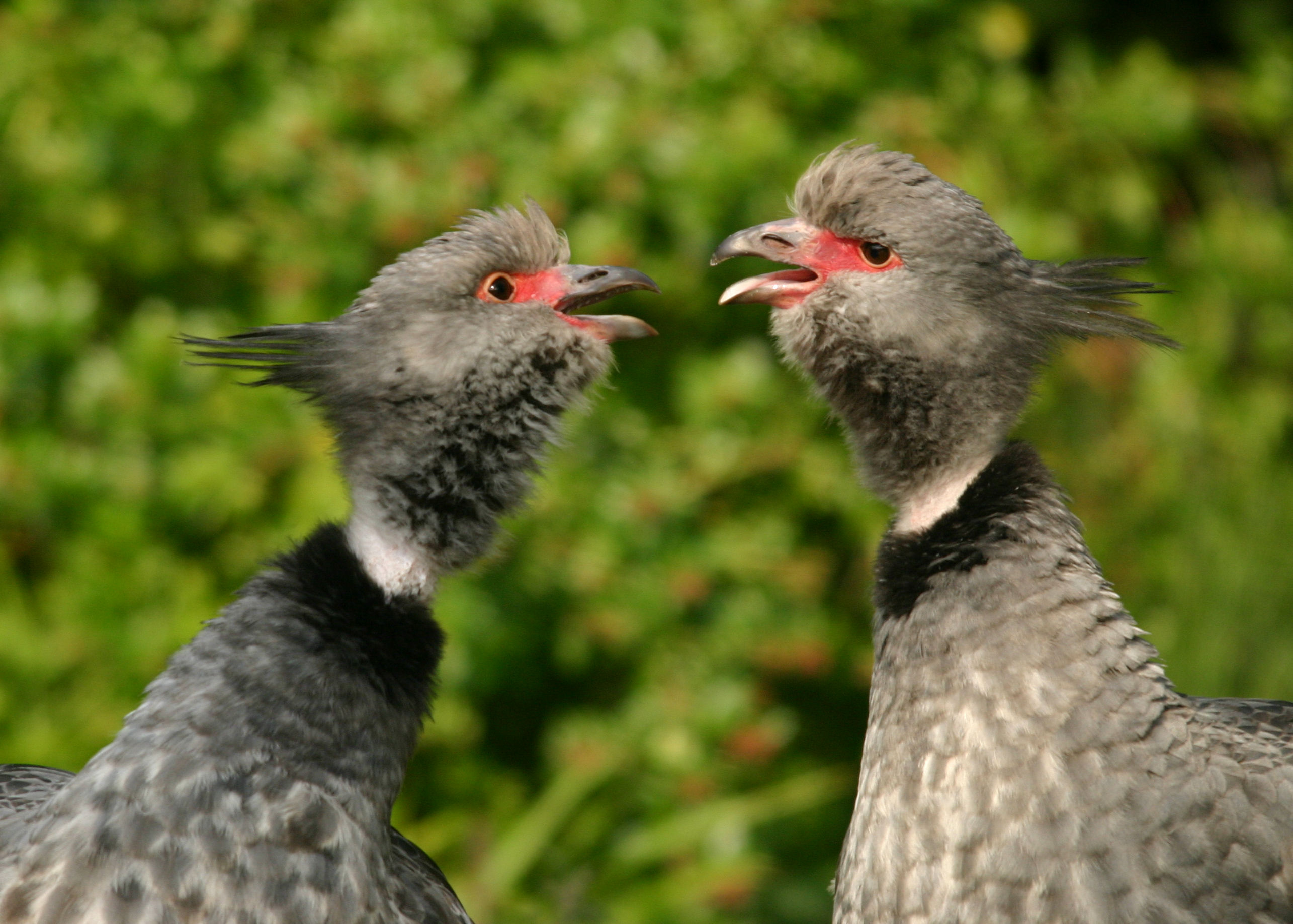
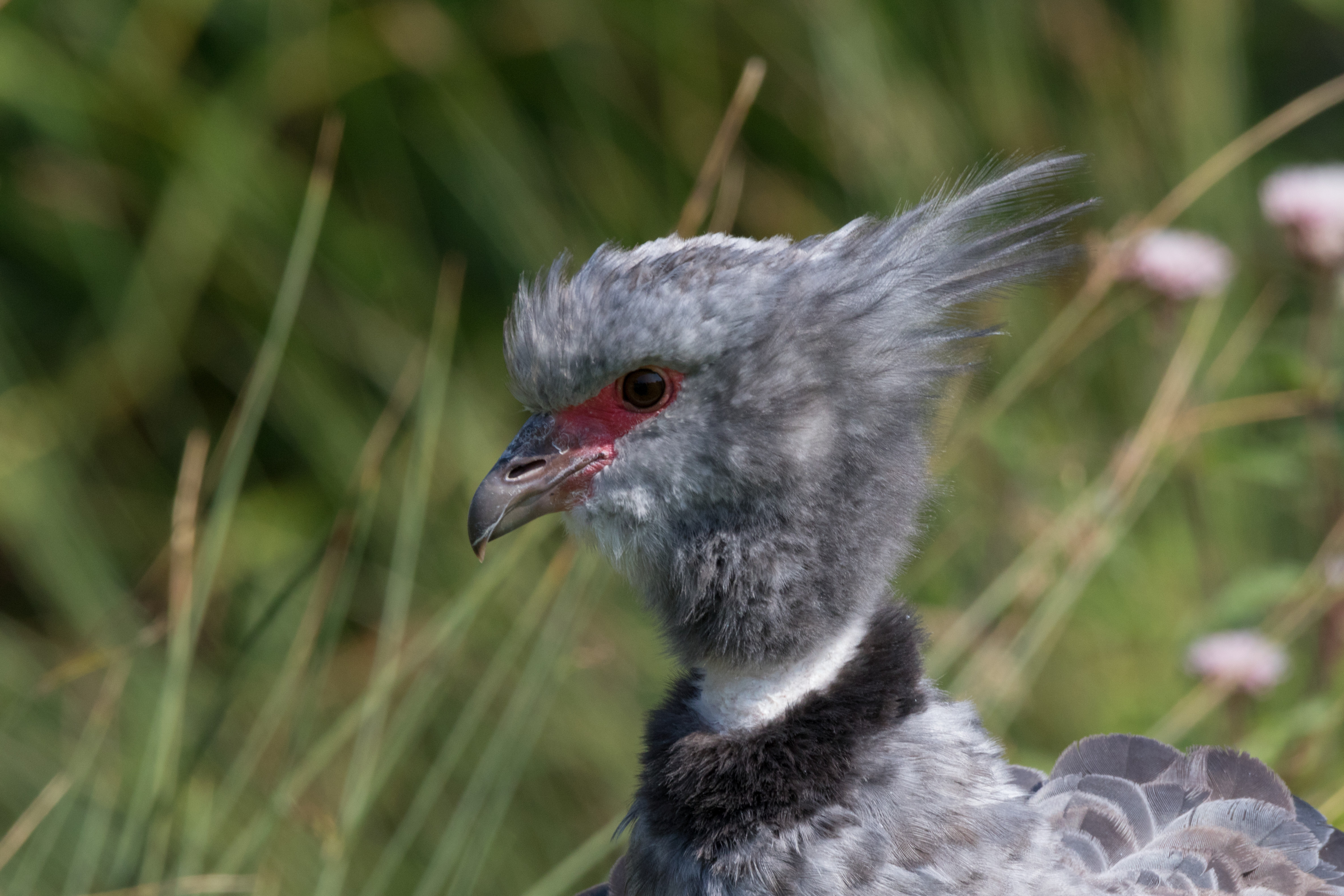
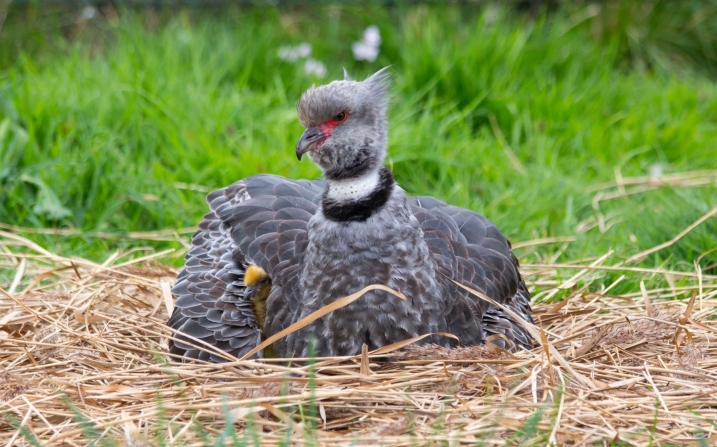
This month we're focusing on one of the noisiest birds in our collection... The crested or Southern screamer. They are aptly named, as their trumpeting alarm call can be heard from several miles away! These incredible prehistoric-looking birds are similar in stature to a large goose or turkey, and are mostly found in Peru and Bolivia. They are members of the family Anhimidae, along with the horned screamer and the northern or black-necked screamer.
Quickfire crested screamer facts:
- They are a monogamous species that make formal pair bonds.
- They have an incubation period of 45+ days (compared to a goose's typical incubation period of 28-35 days).
- Their feet are only partially webbed, allowing them to grasp vegetation with their long toes as they wade through the water.
- As well as their screams, they can also communicate through a low contact call which pops and clicks in their throat.
- They have pockets of air inside their skin (a bit like bubble-wrap) that help them regulate body temperature. These air sacs make them highly unpalatable, meaning they're seldom hunted.
- Their main threats in the wild are habitat destruction and intensive agriculture.
- They're unfussy omnivores, so they get their five-a-day and occasionally eat insects and small animals too.
- The bald section on their neck allows them to regulate their body temperature by hunching or stretching their neck.
- They have hollow 'honeycomb-like' bones, making them relatively lightweight birds for their size. Even their outermost toe bones are hollow!
- Both the males and females have impressive horny spurs on their wings, which they use to defend their territory.
Where can you see them on site?
Head to the Wonders of Wetlands Aviary by the Andean Flamingos to meet the family. While you're there, listen out for the cries of the masked lapwing and the whistle of the black-bellied whistling duck.
Staff at WWT Slimbridge have worked hard to optimise the breeding conditions for the species, so this spring you may even be able to spot a chick between the reeds in the aviary.
Check back next month for another feathered feature!
Is there a specific bird on site that you'd like to learn more about? Nominate them as our next 'bird of the month' by sending us a message on social media.